The Complete Guide to Online ATM Balance Inquiry: Everything You Need to Know in 2025
Performing an online atm balance inquiry is one of the most routine yet essential financial tasks in modern banking, helping millions of people stay aware of their funds at any given moment.
Whether you are a daily digital banking user or someone who prefers traditional methods, knowing how to check your account balance securely and efficiently is a cornerstone of sound money management. The financial technology landscape has evolved dramatically over the past decade, giving consumers unprecedented access to real-time account information through multiple channels. From mobile banking applications to net banking portals, automated telephone systems, and physical ATM machines, the pathways to tracking your account balance have never been more varied or convenient. Understanding how each of these methods works, when to use them, what the numbers actually mean, and how to protect your personal data throughout the process is what separates informed banking customers from those who are constantly at risk of overdrafts, fraud, or financial confusion.
This guide draws from the content strategies and informational depth seen across the top-ranking pages on this topic. It covers the full spectrum — from basic step-by-step instructions to nuanced concepts like available balance versus current balance, security best practices, troubleshooting common issues, and a look at how the future of digital banking is reshaping how we interact with our money.
What Is a Balance Inquiry and Why Does It Matter
A balance inquiry is a request made to your financial institution to view the current amount of money held in your account. It is one of the most frequently performed banking actions worldwide, and for good reason. Knowing exactly how much money you have available at any given moment enables you to make informed spending decisions, avoid unnecessary overdraft fees, time bill payments correctly, and catch fraudulent or erroneous transactions early.
The need to check your account balance regularly is not just a matter of convenience — it is a matter of financial discipline. Studies and financial guidance published by institutions like the Consumer Financial Protection Bureau consistently emphasize that regularly monitoring your account is one of the most effective ways to detect unauthorized charges before they escalate into serious problems.
An online atm balance inquiry serves this purpose on two fronts. On one hand, visiting a physical ATM gives you a quick, screen-based confirmation of your balance without the need for a smartphone or computer. On the other hand, internet banking and mobile apps extend that same capability into the digital world, allowing you to check your account from virtually anywhere on earth as long as you have a device and a secure connection. Both methods tap into the same underlying account database, but they differ in speed, convenience, associated fees, and security considerations.
The Evolution of Balance Checking: From Bank Queues to Digital Screens
Before ATMs became a staple of urban and suburban life, checking your account balance required a physical visit to the bank during working hours. A teller would manually retrieve your account information and provide a paper printout or verbal confirmation. This was time-consuming, inflexible, and largely inaccessible to people with limited mobility or those in rural areas.
The introduction of automated teller machines in the late 1960s and early 1970s fundamentally changed the relationship between consumers and their banks. For the first time, customers could access basic account functions — balance inquiries, cash withdrawals, mini statements — outside of banking hours. ATMs were revolutionary because they brought financial self-service to the everyday consumer, eliminating the dependency on teller availability.
The next major leap came with the rise of internet banking in the 1990s. Banks began offering customers the ability to log in to secure portals and view their accounts from a personal computer. This was followed by mobile banking applications in the 2000s and 2010s, which placed account information literally in the palm of your hand. Today, conducting an online atm balance inquiry — whether through a bank’s website, its mobile app, or via a physical machine — is a seamless process that can be completed in seconds.
The convergence of these technologies means that the modern banking customer has more options than ever. However, more options also mean more complexity, more potential points of failure, and more responsibility on the part of the account holder to understand the nuances of each method.
Seven Primary Methods to Check Your Account Balance
Using Your Bank’s Official Website
Online banking through your bank’s official website remains one of the most comprehensive ways to review your financial status. To check your balance this way, navigate directly to your bank’s official website by typing the address into your browser rather than clicking on links in emails, which could direct you to phishing sites designed to steal your credentials. Once on the website, locate the login or account access section, typically displayed prominently on the homepage. Enter your username and password, complete any two-factor authentication steps your bank requires, and you will generally land on a dashboard that displays all linked accounts alongside their current and available balances.
The online banking portal also gives you access to detailed transaction history, downloadable account statements, fund transfer capabilities, bill payment services, and the ability to update personal information. Online-only banks, which operate without physical branches, tend to invest heavily in their digital interfaces and often provide a more streamlined and feature-rich online experience than traditional brick-and-mortar institutions.
Using Your Bank’s Mobile Application
Mobile banking apps have become the preferred channel for balance checks for a large and growing segment of banking customers. After downloading the official app from your bank’s verified page in the App Store or Google Play Store, you log in with your credentials and are typically taken to a dashboard that displays all your accounts. Many apps offer a balance snapshot or “quick balance” feature that allows you to see your account balance without fully logging in, using biometric authentication like a fingerprint or facial recognition as a shortcut.
Mobile apps update balances in near real-time and often provide instant push notifications when transactions occur, giving you the kind of continuous financial awareness that was impossible just a decade ago. They also allow mobile check deposits, peer-to-peer transfers, and account alerts — making them far more powerful than simple balance checkers.
Performing an ATM Balance Inquiry
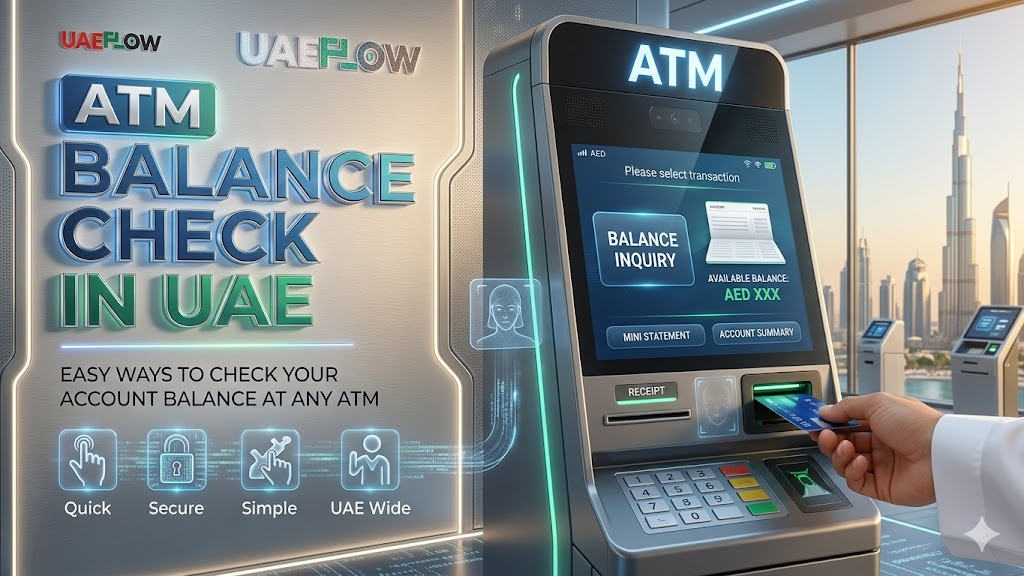
The ATM remains a widely used and reliable channel for checking your account balance, particularly when you do not have internet access or when your smartphone battery is dead. To perform a balance check at an ATM, insert your debit card into the card slot, enter your PIN carefully while shielding the keypad from potential onlookers or skimming devices, and navigate to the “Balance Inquiry” or “Check Balance” option on the ATM’s menu.
The machine will connect to your bank’s servers and display your account balance on screen. Most ATMs will also offer to print a balance receipt, which can be useful for record-keeping. It is best to use an ATM that belongs to your own bank’s network, as out-of-network machines frequently charge fees simply for checking your balance. According to Bankrate’s 2025 Checking Account and ATM Fee Study, the average total ATM fee reached $4.86, which adds up considerably if you perform this action multiple times per month.
An online atm balance inquiry at a machine within your bank’s network, on the other hand, is typically fee-free and takes no more than a minute to complete from card insertion to balance display. salary check uae balance enquiry
Telephone Banking
Despite the ubiquity of smartphones and internet connectivity, telephone banking remains a relevant and useful channel, particularly for customers who are less comfortable with digital interfaces or who do not have access to reliable internet. Most banks operate automated telephone banking systems that are available 24 hours a day, seven days a week. By calling the number printed on the back of your debit card and following the automated voice prompts, you can access your account balance, recent transaction history, and sometimes even perform basic transfers.
To authenticate yourself, the automated system will typically ask for your account number and a PIN, or it may pose security questions. Once verified, your balance is read aloud or displayed on your phone screen if your device supports it.
Reviewing Your Bank Statement
Monthly or periodic bank statements — whether delivered by mail, as a paper document, or accessed digitally through your banking portal — provide a comprehensive record of all transactions and your account balance at the end of the statement period. While a bank statement is not a real-time snapshot of your balance, it is an invaluable tool for reconciling your spending, identifying recurring charges, detecting unauthorized transactions, and understanding your longer-term financial patterns.
Many banks now provide paperless e-statements that can be downloaded as PDF documents from your online banking dashboard. Switching to e-statements is not only environmentally friendly but also reduces the risk of account statements being intercepted in the mail.
SMS and Text Banking
Some financial institutions offer text-based balance inquiry services. Once set up through your online banking account, you can send a specific text command — often a simple keyword like “BAL” — to a designated short code number, and your bank will reply with a text message showing your current account balance and recent transactions. This service is particularly useful in situations where you have cellular signal but no internet data connection, and it requires no app to be installed on your phone.
Checking your balance through this method is typically free from your bank’s side, though standard messaging rates from your mobile carrier may apply.
Visiting a Bank Branch
For complex account inquiries or situations where you need personalized assistance, visiting a bank teller in person remains a viable option. A teller can provide your account balance, help you interpret your transaction history, answer questions about pending charges, and assist with account management tasks that digital channels do not fully support. You will typically need to present your debit card and provide identification to verify your identity before the teller can share account information.
Understanding Your Balance: Current Balance vs. Available Balance
One of the most important concepts for any banking customer to understand is the distinction between the current balance and the available balance displayed during any form of balance check, including when you perform an online atm balance inquiry.
Your current balance — sometimes called the ledger balance or account balance — represents the total amount of money recorded in your account after all completed and posted transactions have been applied. This figure includes deposits, withdrawals, and debit card transactions that have fully processed. However, it does not reflect transactions that are still pending or in the process of clearing.
Your available balance, by contrast, is the amount of money you can actually spend or withdraw at a given moment. This is typically lower than your current balance because it accounts for:
- Pending debit card authorizations that merchants have submitted but not yet fully processed
- Holds placed on recently deposited checks that have not yet fully cleared
- Upcoming scheduled bill payments or automatic transfers
- Any fraud alerts or administrative holds placed by your bank
For example, if you have $800 in your current balance but deposited a $200 check yesterday that has not yet cleared, your available balance may only show $600. Similarly, if you used your debit card at a restaurant yesterday and the restaurant has not yet submitted the final transaction including your tip, your current balance may still show the original pre-tip amount while your available balance has already been adjusted.
Banks use the available balance to determine whether a transaction will cause an overdraft. This is why financial experts consistently advise customers to always base their spending decisions on the available balance rather than the current balance. Always paying close attention to the available balance figure — whether you access it through an app, a bank’s website, or when you do an online atm balance inquiry at a physical machine — is one of the simplest yet most effective habits for avoiding costly overdraft fees.
How ATM Balance Inquiries Work Technically
When you insert your card into an ATM and select the balance inquiry option, a series of encrypted communications takes place behind the scenes in milliseconds. Your card details and PIN are verified locally by the ATM against encrypted data, and the request is then transmitted over a secure banking network — typically the Visa, Mastercard, or a regional interbank network — to your bank’s core banking system.
The bank’s system authenticates the request, retrieves your account balance data, and sends it back to the ATM in encrypted form. The ATM then decrypts the response and displays the balance on screen. This entire process generally takes just a few seconds.
From a security standpoint, financial institutions employ several layers of protection during this process:
Data encryption is applied to all financial data transmitted during a balance inquiry. Even if the data were somehow intercepted during transmission, it would be unreadable without the specific decryption key.
Two-factor authentication is increasingly required, where verification goes beyond just your card and PIN to include a one-time code sent to your mobile number.
Anti-skimming devices are built into newer ATM models to detect and alert about the presence of illegitimately installed devices designed to capture card data.
Regular software updates are applied to ATMs to patch known security vulnerabilities and protect against emerging threats.
For customers, performing a thorough online atm balance inquiry safely means inspecting the ATM for any loose or unusual attachments before inserting your card, covering the keypad when entering your PIN, and preferring well-lit and bank-affiliated ATMs over standalone machines in less monitored locations.
Security Best Practices When Checking Your Balance Online
Digital banking is statistically safer than many people assume, provided that users follow established best practices. Banks invest heavily in encryption, firewalls, biometric authentication, and automatic session timeouts to protect customer accounts. However, the human element remains the weakest link in the security chain. Here is how to stay protected:
Use strong, unique passwords. Your online banking password should be at least 14 to 20 characters long and should combine uppercase and lowercase letters, numbers, and special characters. Never reuse passwords across multiple accounts, and avoid using easily guessable information like your name, birthdate, or address.
Enable two-factor authentication. Most banks now offer two-factor authentication (2FA), which requires you to verify your identity through a second channel — typically a code sent to your mobile phone — in addition to your password. Enabling 2FA significantly reduces the risk of unauthorized access even if your password is compromised.
Never use public Wi-Fi for banking. Public networks in coffee shops, airports, and hotels are notoriously insecure and can be exploited by attackers to intercept your data. Always use a private, password-protected network or a mobile data connection when checking your account.
Type your bank’s URL directly. Phishing scams typically work by sending you a link to a fraudulent website that looks identical to your bank’s genuine site. By typing your bank’s web address directly into your browser rather than clicking any link in an email or text message, you eliminate this risk entirely.
Log out completely after every session. Never leave your banking session open, particularly on shared or public computers. Banks typically have automatic logout features, but manually logging out after every session adds an extra layer of protection.
Keep your devices updated. Anti-malware and antivirus software should be installed on every device you use for banking, and it should be updated regularly to protect against the latest threats.
Set up account alerts. Most banks allow you to configure push notifications or email alerts for any account activity — large transactions, low-balance warnings, login attempts, and password changes. These alerts can be your first line of defense against fraud, giving you immediate notification of any suspicious activity.
Be aware of your surroundings. When checking your balance on your smartphone in public, tilt your screen away from bystanders, use a privacy screen protector if possible, and avoid entering your credentials while someone is standing directly behind you.
Common Issues and How to Troubleshoot Them
Even with the multiple convenient methods available today, customers occasionally run into issues when attempting to access their balance information. Here are the most frequently encountered problems and how to address them:
“Balance Unavailable” at the ATM
This message can appear at an ATM even when you have sufficient funds in your account. It typically reflects a communication issue between the ATM and your bank’s servers, a temporary network outage, scheduled maintenance at the bank, or a compatibility issue between the ATM’s network and your account type. In such cases, try a different ATM or fall back on your mobile app or online banking portal. If the issue persists across all channels and you suspect your balance is incorrect, contact your bank’s customer service immediately.
Login Problems with Online Banking
If you cannot log in to your bank’s website or app, the most common cause is a forgotten password. Use the password reset function on your bank’s login page, which will typically send a reset link or code to your registered email address or mobile number. If you are locked out due to too many failed login attempts, you may need to contact your bank directly to unlock your account.
Discrepancy Between ATM and Online Balance
Occasionally, the balance shown at an ATM may differ slightly from the one displayed in your mobile app. This is usually because different systems update at different intervals and may reflect slightly different transaction states — particularly around pending items. The balance shown through your mobile app or online banking portal is generally more current and more detailed, as it provides both the current and available balance. For the most comprehensive picture, always cross-reference both channels rather than relying on a single source.
Unexpected Charges or Deductions
If your balance is lower than you expect and you cannot identify the reason from your recent transaction history, look carefully for recurring automatic payments, subscription charges, or bank service fees that may have processed. If you identify a charge you do not recognize, report it to your bank as soon as possible. Most banks have a dispute resolution process, and fraudulent charges can often be reversed if reported promptly.
When to Perform a Balance Inquiry and How Often
Financial experts widely recommend that account holders check their bank balance at minimum once a week, and ideally more frequently if they use their debit card regularly. Daily balance checks are increasingly common and easy to maintain given mobile banking apps, and they represent one of the most proactive strategies for staying on top of your financial health.
There are specific situations in which performing a quick online atm balance inquiry becomes particularly important:
- Before making a large discretionary purchase to ensure funds are sufficient
- After receiving a paycheck or direct deposit to confirm the payment has cleared
- Immediately following a major online transaction or international purchase to verify the correct amount was deducted
- Before a scheduled bill payment to confirm your account will not be overdrawn
- After traveling internationally, where currency conversions and foreign transaction fees can result in unexpected deductions
- Periodically throughout the month even when no major transactions are expected, to catch any unauthorized activity early
The Role of Account Alerts in Modern Balance Management
Account alerts represent one of the most underutilized yet powerful tools available to banking customers today. Rather than requiring you to proactively initiate an online atm balance inquiry, alerts reverse the dynamic by pushing information to you the moment something relevant happens.
Banks typically allow you to customize alert thresholds and delivery methods. You can choose to be notified by push notification, email, or text message when:
- Your balance drops below a specified amount
- A transaction exceeds a certain dollar threshold
- A login to your account is detected
- A password change is initiated
- A scheduled payment is processed
- A deposit clears
These alerts serve multiple purposes simultaneously. From a budget management perspective, a low-balance alert can prevent you from accidentally overdrawing your account. From a security standpoint, a login alert or large transaction notification can tip you off to unauthorized account access within seconds of it occurring. Setting up customized alerts is strongly recommended by virtually every financial institution and personal finance expert, and doing so costs nothing beyond a few minutes of configuration time.
Managing Multiple Accounts and Multiple Banks
Many banking customers today maintain accounts at more than one financial institution — perhaps a checking account at a traditional bank, a savings account at an online bank, and a credit union account used for specific purposes. Monitoring the balances across all of these accounts used to require multiple logins and multiple processes, but that complexity has been significantly reduced by the emergence of personal finance aggregation platforms.
These third-party financial apps allow you to link all of your bank accounts in one place, giving you a consolidated view of your total financial position across all institutions. When you perform an online atm balance inquiry through your primary bank’s app, you may be seeing only one piece of your financial picture. Aggregation tools give you the broader view.
However, linking accounts to third-party platforms introduces its own security considerations. Always verify that any platform you use employs bank-level encryption and is compliant with relevant financial data privacy regulations. Read the terms of service carefully, understand how the platform accesses and stores your account data, and enable all available security features.
ATM Balance Inquiry for Travelers
For people who travel internationally, ATM balance inquiries take on additional complexity. When you use an ATM abroad, your transaction is typically routed through an international banking network, which may introduce a small delay compared to domestic inquiries. More importantly, foreign ATMs often charge fees for balance inquiries from non-customer cards, and your home bank may add an additional foreign transaction fee on top.
To minimize costs while traveling, consider the following strategies:
- Use ATMs affiliated with global banking networks that your home bank participates in, as these typically offer reduced or waived fees
- Download your bank’s mobile app before traveling and ensure it works with international phone number formats if you use SMS-based two-factor authentication
- Notify your bank of your travel plans in advance to prevent your card from being flagged and blocked due to unusual geographic activity
- Keep in mind that currency conversion rates applied during international ATM transactions may differ from the rates shown during an online atm balance inquiry back home, as the conversion is applied in real-time based on the prevailing exchange rate
How Digital Banking Is Reshaping the ATM Experience
The relationship between physical ATMs and digital banking is evolving rapidly. Rather than being replaced by smartphones and internet banking, ATMs are being redesigned and upgraded to complement digital experiences. Several trends are reshaping this landscape:
Cardless ATM access is already available at many major banks. By using your bank’s mobile app to generate a one-time access code, you can authorize an ATM transaction without inserting a physical card at all. This reduces the risk of card skimming entirely.
Biometric authentication is beginning to appear at ATM installations globally, with fingerprint scanners and even facial recognition being tested and deployed as alternatives to PIN entry.
Interactive screen interfaces are making ATM menus more intuitive and bringing more features — including more detailed balance breakdowns — to the ATM screen experience.
Integration with mobile banking is deepening, with some ATMs now communicating with your bank’s mobile app in real-time to confirm your identity before you even approach the machine.
For the average banking customer, these developments mean that conducting an online atm balance inquiry will become progressively more seamless, more secure, and more informative — with the line between “online” and “at the machine” continuing to blur.
Frequently Asked Questions
Is it safe to check my bank balance at a public ATM?
Using a public ATM is generally safe provided you take proper precautions. Before inserting your card, inspect the machine for any signs of tampering, such as loose or misaligned card slots, unusual attachments over the keypad, or hidden cameras positioned to capture PIN entries. Always cover the keypad with your hand when entering your PIN. Prefer ATMs located inside bank branches or in well-lit, well-monitored locations over standalone machines in poorly lit or isolated areas.
Does performing a balance check at an ATM cost money?
It depends on the ATM and your bank’s fee structure. Using an ATM within your bank’s own network for a balance inquiry is typically free. Using an out-of-network ATM — one owned by a different bank or by a third-party operator — can incur fees both from the ATM operator and from your own bank. These fees can add up to several dollars per inquiry, making it worthwhile to use your bank’s app or website for routine balance checks and reserving the ATM for situations where no other option is available.
How quickly does my balance update after a transaction?
Debit card transactions, ATM withdrawals, and electronic transfers typically update your available balance within minutes or even seconds of being processed. However, check deposits may take one to two business days, and certain types of deposits may be subject to holds of several business days depending on your bank’s policies. Your current balance updates after transactions officially post, which for some transaction types may be the end of the banking business day.
Can I check the balance of my savings and checking accounts with the same login?
Yes. In most cases, if you have multiple accounts at the same bank — a checking account, a savings account, or even a joint account — they will all be accessible from the same online banking login or mobile app session. Each account’s balance will be displayed individually on the main dashboard.
What should I do if my balance seems wrong?
First, review your recent transaction history for any charges you may have overlooked, including pending items, automatic recurring payments, or bank fees. If you identify a transaction you do not recognize or authorize, contact your bank immediately to report it and initiate a dispute. Banks have defined timeframes within which disputes must be reported to be eligible for resolution, so acting quickly is important.
Is the balance shown during an online ATM balance inquiry always accurate?
The balance displayed reflects the most recent data available to the ATM at the time of the inquiry. For the most accurate and current view of both your current and available balance, your bank’s mobile app or online banking portal is generally the most up-to-date source, as it draws directly from the core banking system without any network intermediaries.
Are balance inquiry fees regulated?
In most countries, there are no specific laws mandating that balance inquiries be free. However, competitive pressure among financial institutions, particularly from online-only banks that offer fee-free banking as a core selling point, has driven many traditional banks to eliminate or reduce fees for balance inquiries at their own ATMs. Always review your bank’s fee schedule, which is typically available on their website or in your account agreement, to understand what charges may apply.
How can I avoid overdraft fees when managing my balance?
The most effective strategies include regularly performing an online atm balance inquiry or checking your balance through your mobile app, setting up low-balance alerts to receive notifications when your account drops below a certain threshold, maintaining a small financial cushion in your checking account beyond what your immediate expenses require, and opting into or enrolling in overdraft protection services offered by your bank.
The Bigger Picture: Why Regular Balance Monitoring Matters
Staying on top of your bank account balance is about much more than just knowing how much money you have at any given moment. It is a fundamental pillar of personal financial management that supports every other aspect of your financial life.
Regular balance monitoring helps you:
- Prevent overdrafts. Knowing your balance before making a purchase or payment ensures you will not inadvertently spend more than you have, triggering expensive overdraft fees.
- Detect fraud early. Unauthorized transactions or identity theft often appear as small, seemingly innocuous charges before escalating into larger ones. Frequent balance checks allow you to spot these anomalies immediately.
- Stay on budget. When you can see in real time how your spending is affecting your account balance, you are better equipped to adjust your behavior before the end of the month rather than after the damage is done.
- Plan larger purchases. Knowing your precise available balance allows you to plan significant expenditures — furniture, travel, electronics — with confidence rather than guesswork.
- Manage recurring payments. Automatic bill payments and subscription charges can sometimes be easy to forget. Monitoring your balance ensures these payments are processed correctly and that you have sufficient funds to cover them.
Performing a regular online atm balance inquiry — through whatever channel works best for your lifestyle and circumstances — takes less than a minute. Building it into your daily or weekly financial routine is one of the simplest, most cost-free habits you can adopt to protect and improve your financial health.
Conclusion
The world of account balance monitoring has expanded far beyond the simple act of visiting a bank branch and asking a teller for your statement balance. Today, banking customers have access to a rich ecosystem of tools — physical ATMs, internet banking portals, mobile applications, telephone systems, text alerts, and third-party aggregation platforms — each offering its own blend of speed, detail, convenience, and security. Understanding how to use these tools effectively, how to interpret what the numbers mean, and how to protect your financial data throughout the process is what empowers you to take genuine control of your financial wellbeing.
Conducting a thorough and secure online atm balance inquiry is not just a transactional task — it is an act of financial literacy and self-empowerment. Whether you prefer the tactile experience of visiting an ATM, the comprehensive overview provided by internet banking, or the instant notifications delivered by a mobile app, the key is consistency. Check your balance regularly, understand the difference between current and available funds, set up alerts that work for your lifestyle, follow all security best practices, and act immediately whenever something looks out of place.
Banking technology will continue to evolve — cardless ATMs, biometric authentication, and deeper mobile integration are already reshaping the experience. But the underlying principle remains unchanged: staying informed about your account balance is the foundation upon which all other aspects of smart, secure, and effective personal financial management are built