E311 Road Name: Sheikh Mohammed Bin Zayed Road Complete Guide
The e311 road name, Sheikh Mohammed bin Zayed Road, is one of the UAE’s most critical inter-emirate highways, connecting Abu Dhabi to Ras Al Khaimah through Dubai, Sharjah, Ajman, and Umm Al Quwain.
Understanding this highway — its official designation, its history, its route, and how it fits into the broader UAE road network — is genuinely useful whether you are a daily commuter navigating rush hour, a new resident figuring out which road to take, or a visitor planning a road trip across the emirates. This guide covers everything from the road’s origins to its current role as a national artery, so you can drive it with full confidence.
The Official Name and What It Means
The e311 road name is Sheikh Mohammed bin Zayed Road, officially adopted in January 2013. Before that renaming, it was widely known as Emirates Road. That original name — Emirates Road — now belongs to a completely different highway, the E611, which was previously called the Dubai Bypass Road. This name swap has caused ongoing confusion among drivers and residents, and it is one of the most common points of misunderstanding in UAE road navigation.
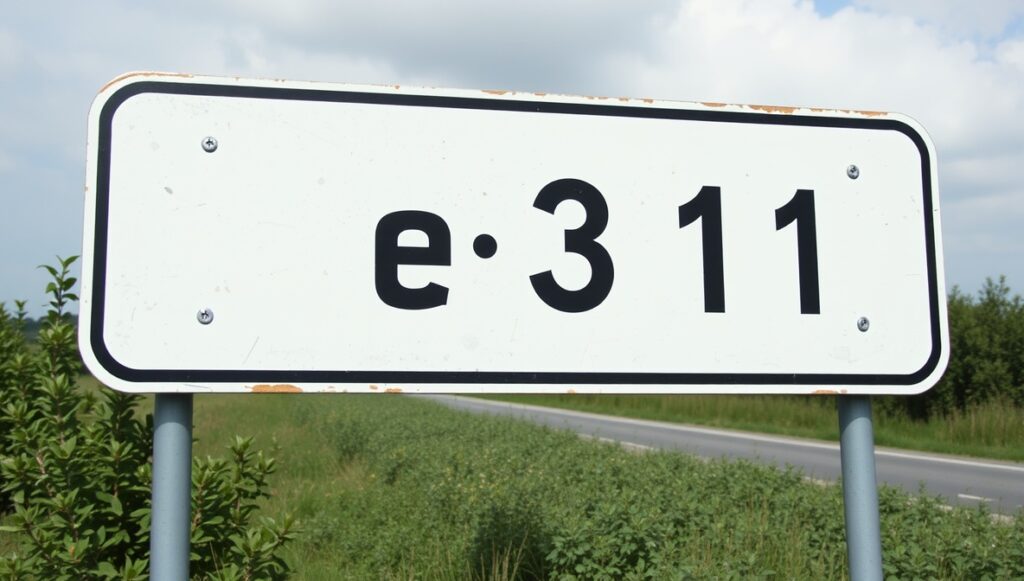
The “E” prefix in the road code stands for Emirates, indicating that this is part of the federal highway network maintained by the UAE’s Ministry of Energy and Infrastructure. The number 311 is simply the federal designation assigned to this specific route within that national network.
In everyday conversation, the e311 road name is often shortened to SMBZ Road, an abbreviation of Sheikh Mohammed bin Zayed. Road signs, navigation apps, and traffic reports all use both the full name and the abbreviation interchangeably, so it helps to be familiar with both.
A Brief History of the Road
The highway was originally planned and designed by Dubai Municipality with a clear purpose: to divert heavy vehicle traffic away from the downtown core and ease congestion on what was then the main artery, Sheikh Zayed Road (E11). As Dubai and Abu Dhabi expanded rapidly in the late 1990s and early 2000s, traffic volumes on E11 reached unsustainable levels, and a parallel relief road became essential.
In mid-2005, the road was extended northward to reach Ras Al Khaimah, the UAE’s northernmost emirate, passing through Sharjah, Ajman, and Umm Al Quwain along the way. This extension transformed what had been a regional road into a full inter-emirate highway spanning the length of the country.
In 2006, the Roads and Transport Authority (RTA) in Dubai undertook a major redevelopment of the road, widening it to six lanes on each side within the Dubai section. This expansion, combined with the replacement of several roundabouts with interchanges and flyovers, significantly improved traffic flow and road safety. etisalat 1 day data package
The e311 road name was officially changed from Emirates Road to Sheikh Mohammed bin Zayed Road by decree in January 2013. That same announcement transferred the Emirates Road name to the E611, which runs parallel further east.
In November 2016, a major extension was completed, linking the Jebel Ali Free Zone in Dubai to New Al Falah in Abu Dhabi. This project cost approximately US$2.1 billion, added four lanes in each direction, and created capacity for 8,000 vehicles per hour. It gave commuters and logistics operators a direct highway connection between the two most populated emirates in the country.
The Full Route: From Abu Dhabi to Ras Al Khaimah
The e311 road name covers a highway that stretches approximately 220 kilometers in total, beginning in New Al Falah in Abu Dhabi and extending northeastward all the way to Al Rifaa in Ras Al Khaimah.
It is worth noting that the road carries a slightly different name depending on which emirate you are driving through. Within Abu Dhabi, it is referred to as Sheikh Mohammed bin Rashid Road. In Dubai and the Northern Emirates, it is known as Sheikh Mohammed bin Zayed Road. Both are part of the same E311 route — the name simply changes at the emirate boundary.
Here is an overview of the key areas the highway passes through:
| Emirate | Key Areas Served |
|---|---|
| Abu Dhabi | New Al Falah, Al Shamkha |
| Dubai | Arabian Ranches, Dubai Silicon Oasis, Mirdif, International City, Dubai Sports City, Jebel Ali |
| Sharjah | Dubai–Sharjah corridor, industrial zones |
| Ajman | Connects to Ajman city |
| Umm Al Quwain | Northern transit route |
| Ras Al Khaimah | Al Rifaa (terminus) |
Within Dubai specifically, the highway runs parallel to Sheikh Zayed Road (E11), sitting to the east. This eastern position makes it particularly vital for residents of communities like Mirdif, Dubai Silicon Oasis, International City, and Arabian Ranches, all of which have direct access to the highway.
How E311 Compares to Other Major UAE Highways
The UAE highway network is built around several parallel north-south arteries. Knowing how the e311 road name fits within this system helps drivers make better routing decisions every day.
| Highway | Official Name | Length | Toll Status | Key Function |
|---|---|---|---|---|
| E11 | Sheikh Zayed Road / Al Ittihad Road | ~558 km | Salik toll gates apply | Longest road in UAE; connects all emirates |
| E311 | Sheikh Mohammed bin Zayed Road | ~220 km | Toll-free | Parallel to E11; inter-emirate connectivity |
| E611 | Emirates Road (Emirates Bypass Road) | ~110 km | Toll-free | Alternative bypassing central Dubai |
| E44 | Al Khail Road / Dubai–Hatta Highway | — | — | Connects Dubai to Hatta and Oman border |
One of the most practical differences between E311 and E11 is the toll question. The e311 road name belongs to a toll-free highway, while E11 has Salik toll gates that charge variable rates depending on the time of day. As of 2025, peak-hour tolls on E11 range up to AED 6 per gate. This makes E311 particularly attractive to commuters who travel daily between Sharjah, Dubai, and Abu Dhabi.
Traffic Patterns and Peak Hours
Despite being toll-free and having six lanes on each side within Dubai, the e311 road name is associated with some of the most severe traffic congestion in the entire UAE. The Sharjah–Dubai corridor is particularly affected, and the congestion follows predictable daily patterns.
Southbound traffic from Sharjah toward Dubai typically begins building from around 5:00 AM, reaching its heaviest point between 6:30 AM and 9:00 AM. Conditions generally ease by 11:00 AM. The reverse pattern unfolds in the evening: northbound traffic from Dubai toward Sharjah begins slowing around 4:00 PM, with peak congestion recorded between 5:00 PM and 7:00 PM.
Key tips for navigating congestion on this highway:
- Avoid southbound travel between 6:30 AM and 9:00 AM on weekdays
- Avoid northbound travel between 5:00 PM and 7:00 PM on weekdays
- Use the E611 as an alternative for longer but less congested northbound trips
- Consider the tolled E11 for a faster journey during peak periods, depending on your destination
- Follow real-time traffic updates through navigation apps before setting out
In September 2024, two new bridges were opened at the Garn Al Sabkha and Sheikh Mohammed bin Zayed Road intersection. These bridges reduced peak-hour travel times at that junction by up to 70%, representing one of the most significant recent improvements to the highway’s performance.
Landmarks and Developments Along the Route
The area surrounding the e311 road name has become one of the most active development corridors in Dubai and the broader UAE. Its accessibility has made it a preferred address for large-scale residential communities, commercial hubs, and major entertainment destinations.
Some of the most notable landmarks and developments located directly along or within easy reach of the highway include:
Global Village — A seasonal cultural and entertainment destination open from October to April each year. It draws millions of visitors from across the region, with pavilions representing more than 90 countries, international food, live performances, and shopping. Its location adjacent to the E311 makes it easily accessible from both Dubai and the Northern Emirates.
IMG Worlds of Adventure — One of the largest indoor theme parks in the world, covering more than 1.5 million square feet. Its proximity to the highway makes it a convenient family destination for visitors arriving from multiple emirates.
Dubai Silicon Oasis — A major technology park and free zone that has grown substantially due to its E311 frontage, making it accessible for businesses and residents from across the emirate.
International City — A large residential and commercial development directly served by the highway, home to a significant proportion of Dubai’s mid-income resident population.
Arabian Ranches — One of Dubai’s most established villa communities, connected directly to the E311 corridor.
Dubai Sports City — A mixed-use development with sports facilities, residential units, and retail, with its junction on the highway serving as a key entry and exit point.
The Role of E311 in UAE Logistics and Trade
The e311 road name carries far more than just passenger vehicles. The highway serves as a critical freight corridor connecting Abu Dhabi’s industrial outskirts, Jebel Ali Port in Dubai, Sharjah’s free zones, and industrial areas further north. Heavy goods vehicles use it extensively to move cargo between emirates, keeping goods flowing without passing through congested city centers.
This logistics function is central to the UAE’s economy. The highway links key industrial zones including Dubai Industrial City, Dubai South, Sharjah’s Al Sajaa industrial area, and various warehousing clusters in the Northern Emirates. By routing freight along E311 rather than through urban highways, the national transport network keeps city streets more manageable and delivery timelines shorter.
Road Safety Improvements Over the Years
There was a time when understanding the e311 road name meant understanding why this was considered the most dangerous road in the UAE. In the first six months of 2006 alone, 19 fatalities were recorded on the Dubai section of the highway. That grim record prompted a serious response from the RTA and traffic authorities.
The improvements implemented over the following years transformed the safety profile of the road dramatically:
- Replacement of dangerous roundabouts with interchanges and flyovers
- Widening to six lanes per side in the Dubai section
- Installation of speed cameras at regular intervals along the route
- Addition of digital signage and intelligent traffic management systems
- Active enforcement of lane discipline by traffic police
- Introduction of smart mobility technologies for real-time traffic monitoring
The result is a highway that, while still busy, now meets modern safety standards and handles its traffic volumes far more effectively than it did in its early years.
Speed Limits and Driving Rules
Speed limits on UAE federal highways are enforced with radar systems and smart cameras. On the E311, the general speed limit is 120 km/h on open highway sections, with lower limits of 80 to 100 km/h near urban zones, interchanges, and areas with active construction. Speed cameras are placed throughout the route, and fines for exceeding posted limits are applied automatically.
In addition to speed limits, lane discipline is actively monitored. Driving in the fast lane while traveling below the posted speed limit is an offense in the UAE. Seat belt use is mandatory for all vehicle occupants. Mobile phone use while driving without a hands-free system is also an offense subject to on-the-spot fines.
Driving tips specific to this highway:
- Keep to the right lane unless overtaking
- Signal clearly before changing lanes, especially in high-density traffic zones
- Maintain a safe following distance at all times — the six-lane sections move fast
- Fog conditions in winter months significantly reduce visibility on this highway; use headlights and reduce speed accordingly
- Keep a hazard triangle and reflective jacket in your vehicle as required by UAE law
Frequently Asked Questions
What is the official e311 road name?
The official e311 road name is Sheikh Mohammed bin Zayed Road, commonly abbreviated as SMBZ Road. Within Abu Dhabi, the same highway is called Sheikh Mohammed bin Rashid Road. It was renamed in January 2013, having previously been known as Emirates Road.
Is the E311 a toll road?
No. The E311 is toll-free. This distinguishes it from the E11 (Sheikh Zayed Road), which has Salik toll gates that charge variable fees during peak and off-peak hours. The absence of tolls on E311 is one reason it attracts such high volumes of daily commuter traffic.
How long is the E311 highway?
The highway spans approximately 220 kilometers from New Al Falah in Abu Dhabi to Al Rifaa in Ras Al Khaimah, passing through Dubai, Sharjah, Ajman, and Umm Al Quwain.
Was E311 always called Sheikh Mohammed bin Zayed Road?
No. The e311 road name has changed over time. Before January 2013, the highway was called Emirates Road. When it was renamed Sheikh Mohammed bin Zayed Road, the Emirates Road name was transferred to the E611, which was previously known as the Dubai Bypass Road.
What are the best alternatives to E311 when it is congested?
The two main alternatives are E11 (Sheikh Zayed Road), which runs parallel to the west but has Salik toll gates, and E611 (Emirates Road), which runs further east and bypasses central Dubai entirely. E611 is particularly useful for travelers heading between Abu Dhabi and the Northern Emirates who do not need to stop in central Dubai.
What major communities are located along the E311?
The highway passes through or near several significant Dubai communities, including Arabian Ranches, Dubai Silicon Oasis, Mirdif, International City, Dubai Sports City, and the Jebel Ali Free Zone. Global Village and IMG Worlds of Adventure are also located directly adjacent to the route.
Why was E311 historically considered dangerous?
The e311 road name was once associated with the highest fatality rate on any UAE road. In the first half of 2006, 19 deaths were recorded on the Dubai section alone. The dangers stemmed largely from poorly designed roundabouts, insufficient lanes for traffic volumes, and limited enforcement. Subsequent upgrades — including new interchanges, flyovers, speed cameras, and lane additions — have dramatically improved safety outcomes on the highway.
Why This Highway Matters
The e311 road name represents far more than a bureaucratic label on a map. Sheikh Mohammed bin Zayed Road is a national artery that connects the UAE’s economic engine in Abu Dhabi and Dubai to the residential and industrial communities of Sharjah, Ajman, Umm Al Quwain, and Ras Al Khaimah. It carries millions of commuters, tonnes of freight, and streams of tourists every single day.
Whether you are navigating peak-hour traffic from Sharjah to Dubai, heading to Global Village on a weekend evening, or managing logistics across the Northern Emirates, this highway is almost certainly part of your route. Knowing the e311 road name, understanding its history, and respecting its traffic patterns makes every journey on it a little more predictable and a great deal safer.