Sonapur Dubai: The Hidden Side of the Glittering City
Sonapur Dubai is a large residential and labour community located within the Al Muhaisnah 3 area of Dubai — migrant workers, labour camps, City of Gold, workforce housing, blue-collar community, South Asian expatriates, Al Muhaisnah, labour accommodation.
When the world imagines Dubai, the mind immediately conjures images of towering glass skyscrapers, golden souks, luxury resorts, and man-made islands. Yet behind every gleaming structure, every freshly paved road, and every immaculate hotel lobby is a community that rarely appears in travel guides or tourist brochures. Sonapur dubai is one of the most talked-about yet least formally defined areas within the city, and it represents a crucial part of Dubai’s social and economic structure. It is a city within a city — functional, resilient, and deeply human. This guide covers everything you need to know about this extraordinary community: its location, history, people, living conditions, culture, transport, food scene, labour reforms, and what the future holds.
What Is Sonapur and Where Did the Name Come From?
The name Sonapur originates from Hindi and Urdu, combining “sona” (gold) and “pur” (city), meaning “City of Gold.” Workers from South Asia who arrived in Dubai during the construction boom of the early 2000s gave this settlement its informal name, reflecting their aspirations of earning money and building a better life for their families back home. The name is both funny and meaningful — for many workers, Dubai was a place where they might make more money, but the truth was frequently much less glamorous than they had hoped.
This area is referred to as Sonapur — literally, Land of Gold in Urdu and Hindi — by expatriate labourers. It is not an official administrative district and does not appear under that label on formal government maps. Nevertheless, the name has become universally recognised among residents, employers, and communities across the UAE.
Location and Geography
Sonapur is an area located within Al Muhaisnah 3, Al Muhaisnah, Mirdif District, Dubai. From Sonapur it takes roughly 26 minutes to drive to Dubai Mall, 38 minutes to Palm Jumeirah, 36 minutes to Burj Al Arab, and 41 minutes to The Walk JBR.
Sonapur is mainly located in the Muhaisnah 2 and Muhaisnah 3 areas, close to Al Qusais and Al Nahda. It sits on the side of Dubai that is closer to Sharjah, which makes it a good location for workers who travel between the two emirates.
By bus, Dubai’s RTA operates several routes to the Muhaisnah area. By taxi, a ride from Downtown Dubai takes around 25–35 minutes depending on traffic. By car, the area is easily accessible via Sheikh Mohammed Bin Zayed Road (E311). The proximity to major industrial zones — including the Al Qusais Industrial Area and logistics hubs further into eastern Dubai — makes sonapur dubai one of the most strategically placed workforce residential zones in the entire emirate.
A Brief History
In the early 2000s, Sonapur started as a group of labour camps for the many migrant workers who were coming to Dubai to work on the construction boom. As time went on, the area grew to fit tens of thousands of labourers from South Asia, Africa, and other places.
Projects like the Burj Khalifa, Dubai Metro, Mall of the Emirates, and Palm Jumeirah demanded a massive workforce. Migrants from India, Pakistan, Bangladesh, Nepal, and beyond arrived in droves, seeking opportunity. To accommodate this influx, the government designated Muhaisnah as a labour housing zone. Companies built camps, and Sonapur quickly grew into one of the largest worker settlements in the region. What started as temporary prefabricated camps has now become a permanent district housing tens of thousands of labourers.
In 2006, living conditions in the collective labour camps were criticised by Human Rights Watch as being “less than human.” As a result of the criticism, the Dubai government closed down 100 underperforming camps and began implementing stricter regulatory standards for housing, sanitation, and worker welfare. This marked a turning point in the story of sonapur dubai, shifting the conversation from neglect toward accountability.
In 2012, several labour camps faced abrupt shutdowns, leaving residents without water or power. Many were relocated under difficult conditions to Sharjah. The incident drew criticism from international observers, highlighting the vulnerability of migrant workers. Such episodes sparked debates on corporate accountability and labour rights, prompting authorities to tighten regulations and improve oversight.
Who Lives Here? The Demographics of the Community
One of the most remarkable features of this area is the sheer scale and diversity of its population. Approximately 200,000 workers from India, Pakistan, Bangladesh, Sri Lanka, Egypt, Nepal, and China live there. This makes sonapur dubai one of the most densely populated labour settlements anywhere in the world.
The majority of workers are men in their 20s to 50s. South Asia — India, Pakistan, Bangladesh, Nepal, and Sri Lanka — makes up the majority. Africa contributes workers from Kenya, Nigeria, and Ethiopia. Southeast Asia — the Philippines, Indonesia, and Myanmar — contributes smaller numbers.
The vast majority of the population in Sonapur is comprised of male workers aged between 20 and 45. They work in various industries including hotel and restaurant cleaning, construction, transport, logistics, and other sectors.
Despite the lack of official recognition on city maps, it is not marked as “Sonapur” on maps because it is more of a nickname used by the community. But everyone in Dubai knows the name. That cultural consensus is itself a testament to how embedded this community has become within the fabric of the city.
Daily Life and Living Conditions
Understanding the daily rhythm inside sonapur dubai means understanding a world governed by work schedules, shared spaces, and the kind of community bonds that form when people are far from home.
Early mornings are marked by the departure of buses transporting workers to various construction sites across Dubai. After long hours under the sun or in physically demanding roles, evenings are a time for relaxation and camaraderie. The streets of Sonapur come alive in the evenings, with workers gathering at small grocery stores, eateries, and makeshift cricket pitches.
Workers typically rely on common dining facilities, shared entertainment, and mobile communication to stay well-connected with their families that live in their home countries. Few workers like to gather in groups, engage in phone calls, or cook together. The opportunities for socialization create a deep sense of community that plays a key role in reducing a feeling of isolation and builds employees’ morale.
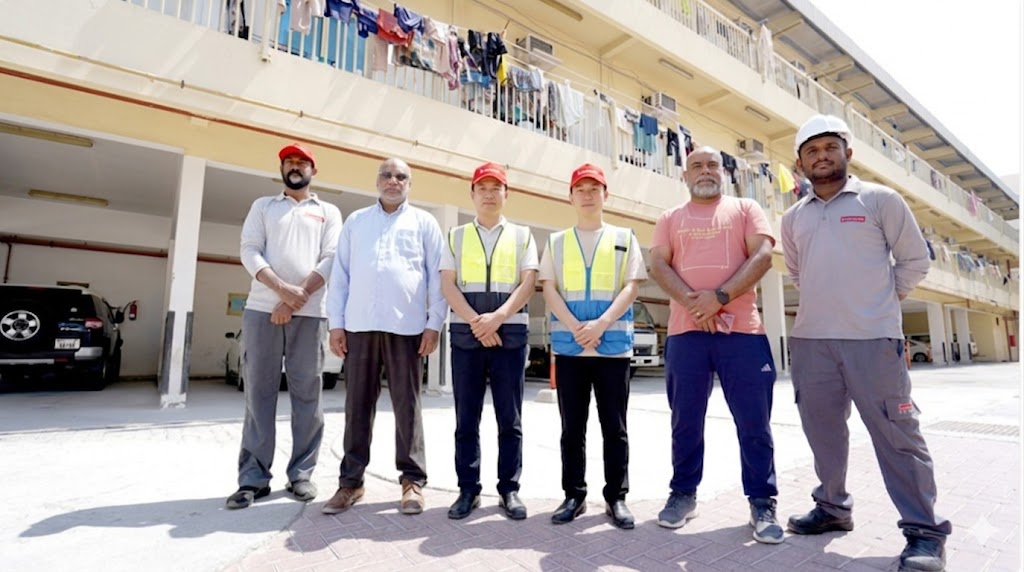
Housing inside the labour camps follows a structured pattern. The worker camps range from basic dormitory-style housing to slightly more modern facilities built in line with recent UAE labour accommodation laws. Shared rooms typically have 4–8 occupants, bunk beds to maximise space, centralised bathrooms and kitchens.
The living conditions are plain but tidy. Fresh water and electricity are in abundant supply. Some of the more modern camps now offer air conditioning, recreational spaces, Wi-Fi access, TV lounges, and first-aid facilities on site — a significant improvement compared to conditions a decade ago.
Friday: The Heartbeat of the Community
If you want to understand sonapur dubai at its most vibrant, visit on a Friday. This Friday vibrancy is an attribute uniquely tied to Sonapur’s labour calendar — it’s their one day off, a moment of celebration and recovery. The streets come alive with cricket matches, laughter, meals shared over plastic chairs, and phone calls to loved ones thousands of miles away.
Mosques fill up with people during the daytime, and roads fill up with people celebrating their working holiday night and evening. Parties, celebrations, socialising, remitting money to the homeland — you get to see the real face of the place.
Festivals such as Eid, Diwali, and Christmas are celebrated with enthusiasm, bringing a sense of home to the otherwise transient lives of the workers. Shared meals, prayers, and cultural performances foster a sense of unity among individuals from diverse backgrounds. This multicultural harmony — dozens of nationalities coexisting in a small geographic area — is one of the most extraordinary, underreported aspects of life in this part of eastern Dubai.

The Food Scene: Authentic, Affordable, and Abundant
Among the most surprising aspects of sonapur dubai for first-time visitors is the quality and variety of food available at remarkably low prices.
Whether it’s a steaming plate of Pakistani biryani, Indian samosas, Bangladeshi fish curry, or Nepali momos, the eateries here serve authentic, home-style meals at prices that suit the everyday worker. For many, food here is not just sustenance but a connection to their homeland.
South Asian food is world famous. If you are a fan and want to taste some in Dubai, visit Sonapur. This place is home to some of the best and most affordable South Asian food. If you have that foodie’s urge to try authentic Pakistani, Indian, Bangladeshi, and Nepali dishes, the restaurants here are your place to go.
Beyond South Asian cuisine, small cafeterias and open-air stalls also serve Middle Eastern staples — shawarma, falafel, manakeesh, and grilled kebabs. The cash-based local economy means that prices remain competitive and reflective of the actual purchasing power of residents, making this area a genuine culinary destination for budget-conscious food lovers anywhere in the emirate.
Transport and Connectivity
Despite sitting on the outskirts of the city’s glamour zones, the transport infrastructure serving sonapur dubai is well-developed enough to keep thousands of workers moving efficiently every day.
Getting around from Sonapur Bus Station Dubai is easy and affordable for workers. Dubai’s transport system connects Sonapur to major areas through RTA buses and private company vehicles. Many workers commute between Bur Dubai and Sonapur daily. The journey usually takes 40–50 minutes depending on traffic. The Sonapur bus station is also a key hub where residents gather, meet friends, and buy essentials from nearby stores and cafeterias — it is not just a bus stop but part of Sonapur’s daily community life.
One of the main advantages of Sonapur Camp Dubai is its prime location. The camp provides direct access to a network of main highways like Sheikh Mohammed Bin Zayed Road and Emirates Road. This easy access to main roads allows workers to easily commute to project sites in Jebel Ali, Dubai Investment Park, and other industrial zones more efficiently and cost-effectively.
For medical needs, the Sonapur Medical Centre Dubai plays a vital role in serving the community, providing general checkups, vaccinations, emergency treatment, and occupational health services. Timing usually runs from 8:00 AM to 10:00 PM, ensuring workers have access before or after work.
The Economic Backbone: What Workers Build
It is impossible to discuss sonapur dubai without acknowledging the scale of the contribution its residents make to the emirate’s economy and physical landscape.
Dubai’s modern skyline didn’t appear overnight. It was built by the hands of thousands of migrant workers — many of whom live in Sonapur. From skyscrapers to roads, their labour shapes the city every day. These workers handle tough jobs in extreme heat for long hours. They build the luxury others enjoy, but live far from that world themselves.
The sectors that rely most heavily on the Sonapur workforce include construction and civil engineering, road and infrastructure development, cleaning and facility management, logistics and warehousing, manufacturing and light industry, and hospitality support services.
Entry-level wages may range from AED 800 to AED 1,200 per month. Some workers receive food and accommodation allowances. While these wages may appear modest, for many workers they represent a transformative income compared to what was available in their home countries. Their aim is not complex — to provide their families with a better life. Their sacrifices are not very visible. However, without them, the success story of Dubai would not be complete.

Labour Reforms and Government Regulations
Recognising the essential role of its labour force, Dubai has introduced reforms over the last decade including housing standards that require companies to comply with regulations on hygiene, space, and safety; healthcare access mandating clinics and medical checks for workers; transport services requiring safe buses for commuting; and heat break laws restricting working hours during extreme summer temperatures.
The camp at Muhaisnah 2 is managed under the oversight of Dubai Municipality, ensuring that the site meets regulatory requirements including ventilation, waste management, fire safety, and compliance with housing standards. lulu balance check
A survey conducted by Dubai Municipality Camp in 2023 revealed that high-quality labour accommodations in Dubai have a direct impact on workers’ morale and productivity. This finding has accelerated the push toward better-regulated, higher-standard housing across all major labour settlements in the UAE.
One notable initiative is the Wage Protection System (WPS), which ensures timely payment of salaries through electronic transfers. This system addresses wage-related grievances and promotes transparency in employer-employee relationships.
Employers seeking compliant housing must now meet MOHRE (Ministry of Human Resources and Emiratisation) certification requirements, which include fire alarms and emergency exits, adequate living space per occupant, hygienic kitchen and bathroom facilities, pest control and regular sanitation inspections, and on-site medical first aid access.
Challenges That Still Remain
Despite genuine progress, sonapur dubai continues to face structural challenges that have not been fully resolved.
High population density remains the most persistent issue. People live together, typically between 6 and 10 people per room, and depend on one another to support each other emotionally and spiritually. While this builds strong community bonds, it also creates pressures on sanitation, personal space, and mental well-being.
Wage gaps and income inequality between the labour class and the broader Dubai population remain stark. Despite the booming of everything in UAE, the labourer’s community is still not fully compensated. There is a chance for improvement in everything — from their wages to their residential places.
Language barriers, limited access to legal advice, and the vulnerability that comes with employer-tied visa sponsorship (the kafala system) continue to affect the rights and freedoms of many residents. International human rights organisations have urged the UAE to accelerate reforms on all these fronts.

Community Spirit and Cultural Identity
What makes sonapur dubai genuinely extraordinary is not its infrastructure or its proximity to industrial zones — it is the remarkable community spirit that has emerged among its residents.
Life in Sonapur Dubai is simple and community-oriented. Shared housing arrangements, local grocery shops, affordable eateries, and essential services form the backbone of everyday life. Social interaction and mutual support are common, helping residents manage the challenges of living away from home.
One of the most unique things about Sonapur is its people. You will find residents from many countries such as India, Pakistan, Bangladesh, Nepal, the Philippines, and many more. This creates a rich mix of languages, cultures, food, and stories. It feels like a global village where everyone works hard to support both Dubai and their families back home.
The area also supports a modest but functioning local economy. Small businesses — grocery shops, phone repair stalls, tailors, barbers, and money transfer outlets — cater to the daily needs of residents and create informal employment opportunities within the community itself.
The Future of Sonapur Dubai
The trajectory of sonapur dubai over the coming years will be shaped by a combination of government policy, employer responsibility, economic conditions, and global attention on migrant worker rights.
With the city focusing on sustainability, worker welfare, and cost-effective logistics, such camps will continue to play a strategic role. Expect further upgrades: enhanced amenities, digitally managed services such as app-based maintenance and transport tracking, and tighter regulatory enforcement.
There’s still a socioeconomic dichotomy between the lifestyles of the elite and those in Sonapur. With focused government action and social awareness, Sonapur could evolve into a model of inclusive urban living.
Urban planners increasingly recognise that sustainable city development cannot occur without addressing the welfare of the workforce that makes it possible. The conversation around inclusive growth, fair wages, dignified housing, and long-term residency pathways for skilled blue-collar workers is only growing louder — and sonapur dubai sits right at the centre of that conversation.

Frequently Asked Questions
What does “Sonapur” mean?
In Hindi and Urdu, the name Sonapur means “City of Gold.” Dubai was advertised as a “golden city” where migrant workers could find much work and make a lot more money than they could back home. The name reflects the aspirations that drew so many workers to the region, even if the daily reality has often been more challenging than the dream suggested.
Where exactly is Sonapur located in Dubai?
Sonapur is located in the Al Muhaisnah industrial area of Dubai, near the border with Sharjah. It is about 14 to 20 kilometres from Dubai’s city centre, depending on the route. It sits within Muhaisnah 2 and Muhaisnah 3, bordered by Al Qusais to the west and Mirdif to the south.
Is Sonapur safe to visit?
Yes. The area is a functioning residential and commercial community. Visitors are unlikely to encounter any safety issues during the daytime. The area is most lively on Friday evenings, when workers enjoy their day off with street gatherings, cricket, and communal meals.
Can tourists visit Sonapur?
Sonapur does not have the glamorous look of Downtown Dubai or Marina, but it has its own charm and community spirit. Visitors interested in experiencing the authentic social fabric of the emirate can explore the area’s food stalls, markets, mosques, and vibrant street life — though it should be approached with respect for the privacy and daily routines of residents.
What kind of food is available in Sonapur?
The area is a hub for affordable South Asian and Middle Eastern cuisine. Biryani, kebabs, daal, roti, momos, samosas, shawarma, and fish curry are among the most commonly found dishes. Prices are among the lowest in all of Dubai, making the food scene here a genuine hidden gem.
What are the working hours regulations for labour camp residents?
Heat break laws restrict working hours during extreme summer temperatures. Under UAE law, outdoor work is banned between 12:30 PM and 3:00 PM during the summer months of June, July, and August. Workers are also entitled to annual leave, sick leave, and end-of-service benefits under UAE Labour Law.
Has the UAE government improved conditions in Sonapur?
Over the years, the UAE has made steps to protect workers. Reforms include the Wage Protection System, mandatory housing standards, regular camp inspections, and healthcare access requirements. While challenges remain, the pace of reform has accelerated significantly since international scrutiny began in the mid-2000s.
How many people live in Sonapur?
Estimates vary, but the broader Muhaisnah district — of which Sonapur is a part — is considered the most populous community in Dubai. With over 235,000 residents, Muhaisnah is the most populous community in Dubai. The labour camp zones specifically are thought to house anywhere from 90,000 to over 200,000 workers depending on how broadly the boundaries are drawn.
Final Thoughts
To truly understand Dubai — not just its skyline, but its soul — you must understand sonapur dubai. It is the other side of the coin, the counterweight to the glamour, and the foundation upon which the city’s extraordinary rise has been built. Sonapur may never appear on a tourist postcard, but it plays a central role in the story of Dubai. The labourers of Sonapur deserve recognition not just as workers, but as co-authors of Dubai’s global success.
Every tower that catches the sun, every road that carries the city’s traffic, every hotel that welcomes a tourist — all of it carries the quiet signature of the men and women who call sonapur dubai home. Their resilience, sacrifice, and community spirit represent something that no luxury branding campaign could manufacture: the genuine human heart of one of the world’s most remarkable cities.
Related Post