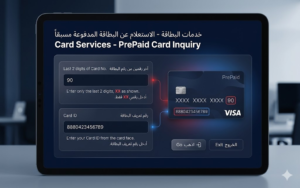
Card Services Prepaid Card Inquiry: Complete 2025 Guide
When managing your money without a traditional bank account, knowing how to navigate a card services prepaid card inquiry is one of the most essential financial skills you can develop. Balance checking, transaction history review, fee management, dispute resolution — these are the building blocks of responsible prepaid card ownership, and understanding each of them can save you money, protect your funds, and give you far greater control over your financial life.
This comprehensive guide covers everything — from the mechanics of how prepaid cards work and why conducting a card services prepaid card inquiry matters, to the different methods available to check your balance, understand your fees, protect your account against fraud, and resolve disputes. Whether you’re a first-time prepaid card user or someone who has relied on these financial tools for years, this guide will help you get the most out of your card.
What Is a Prepaid Card and How Does It Work?
A prepaid card is a payment card that you load with money in advance and then use to make purchases, pay bills, or withdraw cash at ATMs — all without needing a bank account or a line of credit. Unlike traditional debit cards that draw from a bank account or credit cards that draw from a line of credit, a prepaid card allows you to spend only what you have loaded onto it.
Prepaid cards bearing major network logos — such as Visa or Mastercard — can be used anywhere those networks are accepted, from grocery stores and gas stations to online retailers and subscription services.
For the unbanked and underbanked, prepaid cards often serve as a primary way to store and access money, pay bills, shop online, and participate in the modern economy. They also serve a growing number of businesses, nonprofits, and government programs that need a flexible, secure way to distribute funds.
Modern prepaid cards come in several varieties. Reloadable prepaid cards can be topped up repeatedly for ongoing expenses, while non-reloadable prepaid cards are loaded once with a fixed amount and discarded after use — these are commonly given as gifts.
Understanding the difference between these card types matters significantly when you’re trying to conduct a card services prepaid card inquiry because the features available to you — including balance check methods, transaction history access, and dispute resolution — vary depending on whether your card is reloadable and registered.
Why Conducting a Prepaid Card Inquiry Is So Important
Many cardholders underestimate the importance of regularly checking in on their card accounts. Whether you’re reviewing your available balance before a big purchase or scanning your transaction history for unauthorized activity, performing a timely card services prepaid card inquiry is a habit that pays off in multiple ways.
Avoiding declined transactions. Most prepaid cards have balance limits ranging from $500 to $15,000, depending on the issuer and whether you’ve registered the card. To avoid declined transactions or unexpected fees, monitoring your balance regularly through the card’s mobile app, website, or customer service line is essential.
Catching errors and fraud early. You have protections in case of an error or an unauthorized transaction if you have a prepaid card that you have successfully registered. You generally can’t be held responsible for unauthorized charges or other errors on these cards if you report them immediately.
Staying within your budget. Unlike credit cards, prepaid cards don’t allow you to spend beyond your loaded balance. Regularly monitoring your funds through a card services prepaid card inquiry helps you plan purchases and avoid situations where your card gets declined at checkout.
Tracking reload history. Some prepaid cards offer a text alert service to update you about account activity or changes to your account via text message. Using these alerts alongside direct account inquiry keeps your financial picture complete.
Methods to Conduct a Prepaid Card Balance Inquiry
There is no single universal method for performing a card services prepaid card inquiry. Instead, providers typically offer multiple channels so that cardholders can access their account information in the way most convenient for them. Here’s a breakdown of each method available.
Online Account Portal
Some prepaid cards allow you to check your balance on the internet if you set up an online account. Usually this service is free.
Most card issuers provide a dedicated web portal where you can log in using your card number and personal credentials. Once logged in, you can typically view your current balance, browse recent transactions, review pending charges, download statements, and update your personal information. This online access is particularly useful for cardholders who want a detailed view of their spending history over time.
To get started, you’ll usually need to register your card online. Creating your online User ID requires your card number, expiration date, CVV code, and card PIN, along with any security verification steps required by the provider. etisalat unlimited data for 1 day
Mobile App
Most modern prepaid cards come with mobile apps providing real-time balance updates, transaction histories, spending analytics, and budgeting tools — helping you track exactly where your money goes.
Mobile apps have become the most popular channel for a card services prepaid card inquiry because they offer instant access from anywhere, push notifications for new transactions, and often additional features like reload options, ATM locators, and spending category breakdowns.
Easy sign up and sign in — use your device camera to capture your card information for fast signup, and eliminate sign-in hassles by using fingerprint authentication. You can see balances, transactions, and deposits the instant they are available.
Customer Service Phone Line
Every prepaid card will have a customer service phone number printed on the back. You can call this number, usually a toll-free line, and follow the automated prompts to check your balance. You’ll likely need to enter your card number and possibly a PIN or other security information.
This method remains particularly useful when you don’t have internet access or when you want to speak directly with a representative about a specific transaction or account concern. Just be aware that some providers charge a fee for live agent assistance, though automated balance inquiries are typically free.
ATM Balance Inquiry
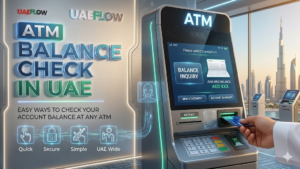
Some prepaid cards allow you to check your balance at an ATM, but you may pay a fee.
Using an ATM to check your balance is convenient if you’re already withdrawing cash, but it’s worth understanding the fee structure before you do. When checking at an ATM, in-network machines may provide balance information for a lower or no fee, while out-of-network ATMs may charge a higher fee.
Text Message / SMS Alerts
Some prepaid cards give you the option to receive your account balance through text message free of charge, though you may pay a fee to your cell phone provider for the text messages.
SMS alerts are a lightweight way to stay on top of your balance without opening an app or logging into a website. Many providers allow you to set up automatic alerts whenever your balance drops below a certain threshold, which is useful for budgeting and avoiding declined transactions.
Understanding Prepaid Card Fees: What to Watch For
One of the most important aspects of conducting a card services prepaid card inquiry isn’t just checking your balance — it’s understanding why your balance may be declining beyond your own spending. Prepaid cards carry a range of potential fees, and knowing what to look for protects you from unexpected charges.
Common Fee Types
With most prepaid cards, you will have to pay fees for holding or using the card, including activation, maintenance, and transaction fees. The types of fees and the amounts vary depending on the card and how it’s used.
Here is a summary of the most common fees cardholders encounter:
| Fee Type | Description |
|---|---|
| Activation Fee | Charged when you first purchase or activate the card |
| Monthly Maintenance Fee | A fixed monthly charge, even if you don’t use the card |
| Per Purchase Fee | Charged each time you use the card to buy something |
| ATM Withdrawal Fee | Charged when you withdraw cash, higher for out-of-network ATMs |
| Balance Inquiry Fee | Charged for checking your balance at an ATM or via phone |
| Cash Reload Fee | Charged when you add cash at a retail reload location |
| Inactivity Fee | Charged if you don’t use your card for a defined period |
| Card Replacement Fee | Charged when your card is lost, stolen, or damaged |
| Foreign Transaction Fee | Charged for purchases made in a foreign currency |
You may be charged a balance inquiry fee if you check your prepaid card balance at an ATM, or if you call customer service to ask about your balance. Not all prepaid cards charge the same fees to check your balance. Most cards offer at least one free way to check your balance — for example, you might be able to check your balance online for free or request the balance information by email or text.
How to Avoid Unnecessary Fees
The accumulation of seemingly small charges — monthly fees, ATM withdrawals, balance inquiries — can add up to hundreds of dollars annually. Prepaid card fee structures vary dramatically between issuers. Always compare the total cost of ownership across multiple prepaid cards before choosing, considering your specific usage patterns.
Practical steps to minimize fees include:
- Always use in-network ATMs for withdrawals and balance checks
- Set up online or mobile access to check your balance for free
- Use direct deposit to reload your card and avoid cash reload fees
- Set up SMS alerts to avoid paying for unnecessary ATM inquiries
- Review the cardholder agreement thoroughly before activating any card
Think about how you plan to use the card. Then look at the fees for the ways you might use the card. The card packaging will include a chart that contains certain key fees and other information about the prepaid account, which you can use to comparison shop between cards at the store.
How to Read Your Prepaid Card Transaction History
When you conduct a card services prepaid card inquiry and access your account, you’ll typically see more than just your current balance. Your transaction history is a record of every purchase, reload, withdrawal, and fee applied to your card — and learning to read it accurately is an important financial skill.
Understanding Pending vs. Posted Transactions
Most prepaid card portals and apps distinguish between pending transactions and posted (settled) transactions. A pending transaction is one that has been authorized by a merchant but not yet fully processed. During this period, the funds are held and temporarily unavailable. Once the merchant finalizes the transaction, it moves from pending to posted, and the exact amount is deducted from your balance.
This distinction matters for a card services prepaid card inquiry because your displayed balance may show “available balance” (after pending holds are subtracted) vs. “total balance” (the full loaded amount). Always pay attention to which figure is shown.
Temporary Holds and Merchant Authorizations
Certain merchants — particularly hotels, car rental agencies, and gas stations — often place a hold on your card that temporarily reduces your available balance by more than the actual purchase amount.
Hotels and car rentals often require a hold on your card — so part of the balance may not be available. And for tipping, the merchant or issuer may authorize your transaction for an additional 20% above your total bill.
Knowing this ahead of time prevents confusion when you perform a card services prepaid card inquiry and see a lower available balance than expected.
Identifying Unauthorized Charges
One of the primary reasons to review your transaction history regularly is to catch any charges you did not authorize. If you notice an unfamiliar transaction during your account review, the steps you take immediately afterward will significantly affect your ability to recover those funds.
Registering Your Prepaid Card: Why It Matters
Many of the protections and features available through a card services prepaid card inquiry — including fraud protection, dispute resolution, and card replacement — are only available to cardholders who have registered their card.
Once the consumer registers the account in their name, they have liability protection and may invoke error resolution provisions.
Registration typically involves providing your name, address, date of birth, and sometimes the last four digits of your Social Security number. This information links your identity to the card, allowing the issuer to verify your account ownership in the event of a dispute or card loss.
Registering your gift or prepaid card helps protect you from fraud and provides important security benefits. By creating an account, you can safeguard your card’s balance against unauthorized access, easily track your spending, and quickly replace the card if it’s lost or stolen.
FDIC insurance is available for some prepaid cards, but only if the issuer partners with an FDIC-member bank and you’ve registered the card. This means registration isn’t just a convenience feature — for some cards, it determines whether your funds have federal deposit insurance protection.
Fraud Protection and Account Security
Prepaid card fraud is a real and growing concern. Because prepaid cards are easy to obtain and often purchased anonymously, they are sometimes targeted by scammers. Understanding the risks — and knowing how to protect yourself — is a critical part of using these financial tools responsibly.
How Fraud Happens on Prepaid Cards
Fraudsters use prepaid cards in various financial scams, including advance fee scams, repair scams, and tax fraud. Because these cards are designed to be easy to purchase and use — even by people without identifying documentation or a credit history — they don’t come with the same kinds of associated cardholder information that make it possible to detect and filter out traditional forms of payment card fraud.
The US Federal Trade Commission warns consumers that “no real business or government agency will ever insist you pay them with a gift card. Anyone who demands to be paid with a gift card is a scammer.”
Steps to Protect Your Card
To keep your funds safe when managing a card services prepaid card inquiry or conducting general account access, follow these best practices:
- Never share your full card number, CVV, or PIN with anyone via phone or email unless you initiated the contact
- Use strong, unique passwords for your online card account
- Enable two-factor authentication where available
- Monitor your transaction history at least once a week
- Set up real-time transaction alerts via SMS or push notification
- Keep the customer service number saved separately from your card in case it is lost or stolen
- Avoid using your prepaid card on public Wi-Fi without a VPN
Registration not only facilitates dispute resolution but also enables issuers to monitor transactions more effectively and provide timely alerts in case of suspicious activities.
What to Do If You Suspect Fraud
Call your card issuer right away if your card or PIN is lost or stolen or if you see unauthorized charges. If you wait too long to report, you could be responsible for more or all of the unauthorized or incorrect charges. Prompt reporting of a card’s loss or an erroneous charge can also prevent additional losses from your account balance.
In addition, the card provider is generally required by federal law to credit the disputed amount to your account while investigating the problem if the investigation will take longer than 10 business days.
How to Dispute a Transaction on Your Prepaid Card
If you identify an incorrect or unauthorized charge while reviewing a card services prepaid card inquiry on your account, you have the right to dispute it. The process varies by issuer, but the general framework is consistent across most major prepaid card providers.
Step-by-Step Dispute Process
Step 1 — Document the transaction. Note the date, merchant name, amount, and any other details visible in your transaction history during your account inquiry.
Step 2 — Contact the card issuer. Call the customer service number on the back of your card or submit a dispute through your online account portal. Be prepared to provide your card number, the specific transaction you’re disputing, and a brief explanation.
Step 3 — Follow up in writing. While a phone call initiates the dispute, following up in writing (via email or the card’s online messaging system) creates a paper trail that protects you if the case escalates.
Step 4 — Monitor the investigation. The card provider is generally required by federal law to credit the disputed amount to your account while investigating the problem if the investigation will take longer than 10 business days.
Step 5 — Escalate if needed. If the issuer’s resolution is unsatisfactory, you can file a complaint with the Consumer Financial Protection Bureau (CFPB), which is the primary federal regulator overseeing prepaid card issuers in the United States.
In general, to receive maximum protection, consumers must make a report within two business days of learning of a lost or stolen card or access device, or within 120 days of an unauthorized charge if the card was not lost or stolen.
Reloading Your Prepaid Card
Another key dimension of managing your prepaid card effectively is understanding how and when to reload it. The reload process is directly connected to your balance inquiry habit — knowing your current balance helps you decide whether and how much to reload.
Common Reload Methods
Getting money onto your prepaid card is straightforward. Loading options are flexible, whether through direct deposit, cash transactions, bank transfers, or mobile apps.
Direct Deposit is the most cost-effective reload method for most cardholders. By having your paycheck or government benefits deposited directly to your prepaid card account, you eliminate cash reload fees, often receive your funds earlier than a paper check would arrive, and may even qualify for fee waivers on your monthly maintenance charge.
Cash Reload at Retail Locations allows you to add funds at participating stores and kiosks. A cash reload fee is imposed by a card provider or other entity for adding money to your card using cash. Most prepaid cards provide other options for loading money to your card, including direct deposit, which may save you money by avoiding the cash reload fee.
Bank Transfer allows you to move funds from a linked checking or savings account to your prepaid card. This method is typically free, though it may take one to two business days to process.
Mobile Check Deposit is available on many prepaid card apps, allowing you to photograph a paper check and deposit it directly to your card balance.
Reload Packs are physical vouchers available at many retail locations. A reload pack is a product you can buy to add money to your prepaid card. You purchase the pack for a set dollar amount, then use the provided code to apply the funds to your card.
Managing Your Reload Schedule
After conducting a card services prepaid card inquiry and identifying your current balance and recent spending patterns, you can plan your reload schedule accordingly. Many financial experts recommend keeping a buffer of at least 10–20% above your expected monthly expenditures to avoid declined transactions due to temporary holds or pending fees.
Prepaid Card Types and Use Cases
Not all prepaid cards serve the same purpose, and matching the right card type to your specific needs makes the inquiry and management process much simpler.
General Purpose Reloadable (GPR) Cards
A reloadable prepaid card allows you to add more money. This type of card is sometimes called a General Purpose Reloadable Card, or GPR Card. Some cards start out as non-reloadable but can be reloaded once you complete a registration process.
GPR cards are the most versatile type and are appropriate for most everyday financial needs. They support direct deposit, come with robust online account management tools, and are accepted at virtually all merchants that accept Visa or Mastercard.
Payroll Cards
Payroll cards function as GPR cards but are specifically issued by employers to pay employees electronically without requiring a bank account. You have a choice of how to receive your wages or salary and how to receive payment of some kinds of government benefits. Your employer cannot force you to use a payroll card to receive your wages.
Government Benefit Cards
Federal and state agencies increasingly use prepaid cards to disburse benefits, tax refunds, and other payments. Government prepaid debit card programs provide an electronic alternative to checks or cash, creating electronic payments that are safe, reliable, and convenient. These cards use standard chip-based security technology and provide chip and signature protection, with consumer protections for fraud, loss, and errors.
Gift Cards
Gift cards are typically non-reloadable, single-purpose prepaid cards. While they function similarly in terms of spending, their inquiry options are usually simpler — typically limited to a balance check by phone or online using the card number and security code.
Teen and Student Cards
Many issuers now offer prepaid cards specifically designed for young people learning to manage money. These cards often include parental controls, spending alerts, and educational tools that make the account inquiry process more transparent and educational for younger users.
Prepaid Cards vs. Debit Cards vs. Credit Cards: A Feature Comparison
Understanding how prepaid cards compare to other payment products helps you make informed decisions about which tool to use and when a card services prepaid card inquiry is most important.
| Feature | Prepaid Card | Debit Card | Credit Card |
|---|---|---|---|
| Bank Account Required | No | Yes | No (but credit check) |
| Credit Check Required | No | No | Yes |
| Builds Credit History | No | No | Yes |
| Spend Only What’s Loaded | Yes | Yes (mostly) | No |
| Fraud Protection | Varies (registered cards) | Yes (EFTA) | Yes (FCBA) |
| Overdraft Risk | None | Possible | None |
| Balance Inquiry Options | Online, app, phone, ATM | Online, app, phone, ATM | Online, app, phone, ATM |
| Reload/Refill | Yes (reloadable types) | N/A | N/A |
| FDIC Insurance | Sometimes (if registered) | Yes | N/A |
Prepaid cards generally offer fewer consumer protections than credit cards and sometimes even less than traditional debit cards. However, working with a trusted provider can minimize these risks and offer better user experiences.
Regulatory Protections for Prepaid Cardholders
Prepaid card users in the United States benefit from a regulatory framework designed to ensure transparency and fairness. Knowing your legal rights is just as important as knowing how to perform a card services prepaid card inquiry.
The CFPB Prepaid Card Rule
The CFPB rule requires two forms of disclosure — one short and one long — with easy-to-understand information. The short form clearly highlights key prepaid account information, including periodic fees, per purchase fees, ATM withdrawal and balance inquiry fees, cash reload fees, customer service fees, and inactivity fees. Consumers also get or can access a comprehensive long-form disclosure containing a complete list of fees and other key information before acquiring the account.
This regulation means that before you even activate a card, you should have access to a full disclosure of all fees associated with account maintenance, reloading, cash access, and balance inquiries.
Cardholder Agreement
A cardholder agreement states the terms and conditions that apply to a prepaid card offered to a customer. Among other provisions, the cardholder agreement outlines applicable fees, your liability for unauthorized transactions, and any withdrawal, loading, or spending limits. If you lose your cardholder agreement, you can obtain one on the card issuer’s website or by calling the card issuer.
Always read the cardholder agreement in full before using a new prepaid card. This document contains the rules governing every aspect of your account — including exactly how you can conduct a card services prepaid card inquiry without incurring fees.
FDIC Deposit Insurance
FDIC insurance is available for some prepaid cards, but only if the issuer partners with an FDIC-member bank and you’ve registered the card. This protection means that in the unlikely event your card issuer fails financially, your funds are insured up to the standard coverage limits — but only if you’ve registered the card.
Choosing the Right Prepaid Card for Your Needs
With dozens of prepaid card options available in the market, selecting the right one requires careful evaluation of several key factors.
Key Factors to Evaluate
Fee Structure. Always compare the total annual cost of owning and using a card across all your anticipated usage patterns — not just the monthly fee. A card with no monthly fee but high per-transaction fees may cost more than a card with a flat monthly charge.
Inquiry and Account Management Options. Look for cards that offer free online and mobile balance inquiry, real-time transaction alerts, and robust mobile apps. A card services prepaid card inquiry should always be possible through at least one free channel.
Network Acceptance. Cards issued on the Visa or Mastercard networks are accepted at the broadest range of merchants, both domestically and internationally.
Customer Service Quality. Good customer service can make a difference when you need help understanding the features or troubleshooting any problems. Check for customer service ratings and reviews to see how other users have experienced customer service from the provider.
Reload Options. The more reload methods available — direct deposit, bank transfer, cash reload, mobile check — the more flexibility you’ll have in keeping your card funded.
Consumer Protections. Prioritize issuers that offer fraud monitoring, zero liability policies for registered cardholders, and a clear dispute resolution process.
FDIC Insurance. Confirm whether the issuer partners with an FDIC-insured bank, which provides an additional layer of protection for your loaded funds.
Tips for Getting the Most Out of Your Prepaid Card
Beyond the basics of balance checking and fee management, there are several practical strategies that can significantly improve your experience as a prepaid cardholder.
Set up alerts immediately. The first thing you should do after activating any new prepaid card is configure account alerts for every transaction, every low-balance threshold, and every reload. These notifications essentially automate your monitoring so you’re always aware of your card’s status without needing to perform a manual card services prepaid card inquiry every day.
Use direct deposit. Enrolling in direct deposit transforms your prepaid card from a basic spending tool into a more comprehensive financial account. Most issuers offer early access to deposited funds, which means your pay may arrive a day or two before your official payday.
Link a backup payment method. Some prepaid card apps allow you to link a bank account for instant transfers. Having this backup ready ensures you can reload your card quickly if your balance runs low during a trip or at a critical payment moment.
Track spending categories. Many modern prepaid card apps categorize your transactions automatically — groceries, transportation, entertainment, and so on. Reviewing these categories alongside your regular account inquiry helps you spot spending patterns and make smarter financial decisions over time.
Protect your PIN. Your PIN is the primary security mechanism protecting your funds at ATMs and many point-of-sale terminals. Never write it on the card, share it with others, or use an easily guessed sequence like 1234 or your birth year.
Read statements. Even if you check your balance frequently, reviewing a full monthly statement ensures you haven’t missed any small recurring fees or unfamiliar charges that individual transaction reviews might overlook.
Frequently Asked Questions
What information do I need to conduct a card services prepaid card inquiry?
You typically need your 16-digit card number, the card’s expiration date, and possibly your CVV security code and PIN. Online portals and mobile apps may also require your username and password if you’ve already registered. For phone inquiries, the automated system will usually ask for your card number and possibly additional verification details.
Can I check my prepaid card balance without registering the card?
Yes, in most cases. Many issuers allow unregistered cardholders to check their balance by calling the number on the back of the card or visiting the card’s website and entering the card number. However, setting up an online account is usually the easiest and most free way to check your balance, and most of these services are available at no charge. Note that without registration, your fraud protections are significantly limited.
Is there a fee every time I check my prepaid card balance?
It depends on the method you use. Not all prepaid cards charge the same fees to check your balance. Most cards offer at least one free way to check your balance — for example, checking online for free or requesting balance information by email or text. ATM balance checks, however, often carry a fee, particularly at out-of-network machines.
What should I do if my prepaid card is lost or stolen?
Call your card issuer right away if your card or PIN is lost or stolen or if you see unauthorized charges. If you wait too long to report, you could be responsible for more or all of the unauthorized or incorrect charges. Most issuers can freeze your card immediately upon your report and issue a replacement card with the remaining balance transferred.
Can I dispute a charge on my prepaid card?
Yes, especially if your card is registered. You have protections in case of an error or an unauthorized transaction if you have a prepaid card that you have successfully registered. You generally can’t be held responsible for unauthorized charges or other errors on these cards if you report them immediately. Contact your card issuer’s customer service to initiate a dispute.
Why is my prepaid card balance lower than expected?
Several factors can reduce your available balance beyond your own spending: pending merchant holds, monthly maintenance fees, ATM fees, inactivity charges, or balance inquiry fees. Performing a detailed card services prepaid card inquiry through your online account or app — which shows both your balance and a full transaction history — is the best way to identify the cause.
Can I use my prepaid card internationally?
Modern prepaid cards work virtually anywhere — online retailers, brick-and-mortar stores, restaurants, and internationally — provided they carry a major network logo like Visa or Mastercard. However, foreign transaction fees typically apply, so review your cardholder agreement before using your card abroad.
What happens to the money on my prepaid card when it expires?
Your money does not disappear when your card expires. The funds remain in your account, and the issuer typically sends a replacement card automatically. If not, you can contact customer service to request a card renewal and have your balance transferred to the new card.
Is my prepaid card balance FDIC insured?
FDIC insurance is available for some prepaid cards, but only if the issuer partners with an FDIC-member bank and you’ve registered the card. Check your cardholder agreement or the issuer’s website to confirm whether your funds are insured.
How long does it take for a disputed transaction to be resolved?
The card provider is generally required by federal law to credit the disputed amount to your account while investigating the problem if the investigation will take longer than 10 business days. Full investigations may take longer, but the temporary credit ensures you’re not out of pocket during the process.
The Future of Prepaid Card Services
The prepaid card industry continues to evolve rapidly, with technology reshaping the account management experience in significant ways. Biometric authentication — fingerprint and facial recognition — is becoming standard in mobile apps, making it faster and more secure than ever to access your account. Real-time push notifications mean that every transaction triggers an immediate alert, reducing the window for undetected fraud to virtually zero.
Prepaid cards have moved beyond one-size-fits-all solutions. Today, they serve as critical infrastructure for businesses and communities alike. As a leading tool for reaching underserved populations, adding value to bank and retail offerings, or creating new payments experiences, prepaid cards now offer a reliable and customizable alternative to checks or direct deposits.
Virtual prepaid cards — digital-only versions stored in mobile wallets — are gaining popularity for online shopping, offering an extra layer of security because the physical card never exists and can be instantly frozen or disposed of after a transaction.
Government programs, corporate incentive schemes, healthcare spending accounts, and payroll disbursement systems are all increasingly relying on prepaid card infrastructure, which means the tools and channels available for performing a card services prepaid card inquiry will only become more sophisticated and user-friendly in the years ahead.
Conclusion
A prepaid card is far more than a simple payment tool — it is a financial account that requires the same level of attention, vigilance, and management that you would apply to any bank account. Regularly performing a card services prepaid card inquiry is the foundation of good prepaid card ownership. It keeps you aware of your available funds, helps you catch unauthorized transactions early, ensures you understand the fees being charged, and gives you the information you need to make smart financial decisions every day.
From online portals and mobile apps to ATMs and phone-based systems, the tools for managing your prepaid card account have never been more accessible. Combine those tools with a solid understanding of your cardholder agreement, your consumer rights under federal regulations, and best practices for account security, and you have everything you need to use your prepaid card confidently, efficiently, and safely.
Whether you’re new to prepaid cards or a longtime user looking to optimize your account management, the knowledge in this guide equips you to take full advantage of everything these versatile financial products have to offer — starting with the simple, essential habit of conducting a regular card services prepaid card inquiry and staying in control of your money.