Equiti Metro Station: The Complete Guide to Dubai’s Iconic Red Line Hub (2026)
equiti metro station, Dubai Metro Red Line, Sheikh Zayed Road transit hub, Al Quoz metro connectivity, Nol card Dubai, RTA metro stations, Dubai public transport, Gold and Diamond Park metro access, Umm Al Sheif metro, feeder bus F25 F26
Dubai is a city that has built its identity on the twin pillars of ambition and efficiency. Nowhere is this more evident than in its world-class metro system — a network that quietly stitches together the lives of millions of residents, workers, and visitors every single day. At the heart of this network, bridging the commercial energy of Al Quoz with the residential calm of Umm Al Sheif, sits one of the Red Line’s most strategically significant stops. The equiti metro station is far more than just a place to board a train. It is a gateway, a landmark, and a daily lifeline for tens of thousands of commuters who depend on it to navigate one of the most dynamic urban environments on the planet.
Whether you are a seasoned Dubai resident who has passed through it countless times, a newcomer looking to understand the city’s transport grid, or a tourist eager to explore the landmarks that surround it, this comprehensive guide covers everything you need to know. From its layered history and precise operating timings to its passenger amenities, nearby attractions, fare structure, accessibility features, and future development plans — consider this your definitive reference for everything related to the equiti metro station.
A Station Born from Dubai’s Urban Vision
To truly understand the significance of the equiti metro station, you need to travel back to October 2009, when Dubai made history by opening the world’s longest fully automated driverless metro network. The Red Line was the backbone of this extraordinary achievement, slicing through the city along the iconic Sheikh Zayed Road corridor — the arterial highway that connects Dubai’s past, present, and future.
The station was inaugurated on October 15, 2010, as part of the ambitious Dubai Metro project. It was one of the second-phase openings that extended the Red Line further, consolidating the metro network’s grip on the Sheikh Zayed Road corridor and opening up transit access to neighborhoods that had previously relied entirely on private vehicles and taxis.
Dubai’s Roads and Transport Authority (RTA) has historically used metro station naming rights as a rewarding investment opportunity for numerous companies and businesses in the UAE to promote their brands, with Dubai Metro stations serving as strategic locations for investors to showcase their brands. This policy of corporate naming rights has given the station a colorful history of identities that mirrors Dubai’s evolving financial and commercial landscape.
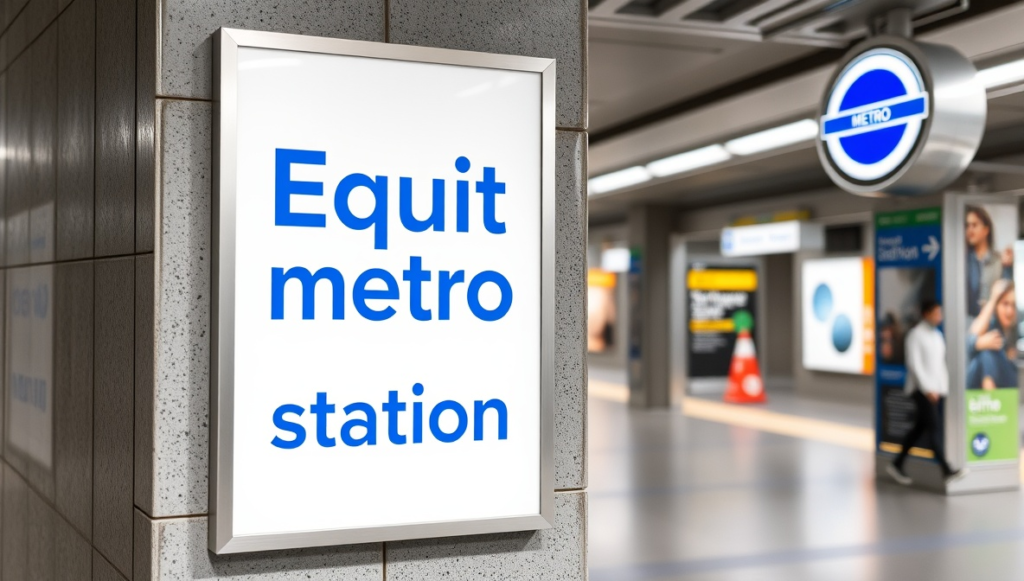
The station has undergone quite a few name changes since it first opened in 2010 as First Gulf Bank Metro Station. It was renamed First Abu Dhabi Bank Metro Station in 2018, following the merger of First Gulf Bank and the National Bank of Abu Dhabi. The station was renamed Umm Al Sheif Metro Station in November 2020. In April 2022, it was renamed Equiti Metro Station, following a sponsorship deal between the RTA and Equiti Group, a brokerage services provider.
The RTA granted Equiti Group, a leading provider of brokerage services across individuals, companies, and organisations, the naming rights of Umm Al Sheif metro station for a period of 10 years. The station operates on the Red Line of the Dubai Metro network and features a strategic location, thanks to connectivity to several key roads, and proximity to iconic landmarks of Dubai.
This naming journey is not merely administrative trivia. It tells the story of Dubai’s business culture — a city where public infrastructure and private enterprise collaborate fluidly, where corporate identity is woven into the fabric of everyday life. This naming journey reflects Dubai’s dynamic commercial identity and the city’s practice of aligning infrastructure with prominent business institutions.
The station was temporarily closed in April 2024 due to flooding but resumed operations swiftly in May — a testament to Dubai’s infrastructure resilience. This episode, while disruptive, demonstrated the RTA’s capacity to respond quickly to emergency situations while maintaining the broader integrity of the metro network.
Precise Location and Strategic Positioning
The equiti metro station is strategically located on the Sheikh Zayed Road Highway in the heart of the Al Quoz district of Dubai, UAE. It is situated between the Mashreq and Al Khail metro stations as part of the Dubai Metro Red Line. The station accommodates services to the regional commercial zones and industrial as well as residential regions within Al Quoz. Easy access is provided from most locations along Sheikh Zayed Road.
The station is built on Sheikh Zayed Road (E11) and is close to the interchange with Umm Suqeim Street (D63). It lies between popular places like Al Quoz, Umm Al Sheif, and Al Manara and is readily accessible to other places in the city.
Its elevated position above Sheikh Zayed Road is itself a feat of urban engineering. Rather than requiring passengers to travel underground, the station sits high above the highway, offering a vantage point over one of Dubai’s most important thoroughfares. This elevated design also minimizes disruption to the heavy traffic that flows beneath it daily, a deliberate and thoughtful engineering choice by the RTA and its partners.
The station, designated as R31, features air-conditioned platforms with platform screen doors, typical of the fully automated Dubai Metro network, and operates daily from 5:00 AM to midnight (extended to 1:00 AM on Fridays and Saturdays).
The surrounding geography is equally significant. To the immediate north, the Al Quoz industrial area hums with warehouses, workshops, art galleries, and commercial enterprises. To the south, the more residential character of Umm Al Sheif offers a quieter backdrop. And threading through both is Sheikh Zayed Road itself — a constant flow of commerce, culture, and commuting that has made this precise location so indispensable.
Architectural Design and Engineering Features
The design of the equiti metro station reflects the broader aesthetic philosophy of the Dubai Metro — clean lines, futuristic form, and purposeful function. As an elevated structure, it rises above street level, connected to the ground below by a network of escalators, elevators, and staircases that allow passengers to flow efficiently from the road to the platform and back again.
Due to the need to minimize disruption to the traffic on Sheikh Zayed Road, the station was designed as an elevated structure with deep foundations. Footbridges were integrated into the design to link the station with surrounding areas, offering safe pedestrian access. The station also implemented automated ticketing systems, enhancing operational efficiency and reducing the need for on-site staff.
The platform itself is a model of modern transit design. Air conditioning is a non-negotiable feature in Dubai’s extreme climate, and the station’s cooling systems ensure that waiting passengers remain comfortable even during the punishing summer months when outdoor temperatures routinely exceed 40°C. Platform screen doors — glass barriers that align precisely with train doors — separate passengers from the tracks until the train arrives, improving both safety and the efficiency of the air conditioning system.
Digital information displays positioned throughout the station provide real-time train arrival data, helping passengers plan their movements and reducing the anxiety that comes with uncertainty in transit environments. The overall design is intended to be intuitive, accessible, and welcoming — qualities that define Dubai’s broader approach to public service infrastructure.
The footbridge connecting both sides of Sheikh Zayed Road is a particularly important feature. Without it, pedestrians attempting to cross this multi-lane highway would face a dangerous and impractical journey. The bridge not only makes the equiti metro station accessible from both sides of the road but also serves as a vital piece of urban pedestrian infrastructure for the surrounding community.
Operating Hours and Train Frequency
Understanding the timing structure of the equiti metro station is essential for anyone who plans to use it regularly or for a specific journey. The station’s hours follow the standard Dubai Metro Red Line schedule, which is organized around weekday and weekend patterns.
On most days, trains begin around 5:00 AM and run until midnight. On Fridays, services usually extend until about 1:00 AM.
During peak commuting hours — typically between 7:30 AM and 9:30 AM in the morning, and again between 5:00 PM and 7:30 PM in the evening — trains arrive with greater frequency. During peak times, the trains usually come every 3–5 minutes, whereas during off-peak hours, trains come every 6–8 minutes.
This frequency makes the equiti metro station one of the most reliable transit options in its area. Unlike road travel, which is subject to the notorious traffic congestion that builds along Sheikh Zayed Road during rush hours, the metro runs on a fixed track, unaffected by surface conditions. For daily commuters, this predictability has an enormous quality-of-life value.
It is important to note that these timings can vary during public holidays, special events, and occasions such as New Year’s Eve or major national celebrations, when the RTA often extends services to accommodate the increased passenger volumes. Travelers are advised to check the RTA’s official S’hail app for real-time schedule updates before planning any time-sensitive journey.
Fare Structure and Payment Methods
The fare system at the equiti metro station is part of Dubai’s integrated, zone-based pricing structure administered by the RTA. Understanding how fares are calculated helps passengers make the most of their travel budget and avoid unnecessary expense.
The equiti metro station falls under Zone 2 of the Dubai Metro fare structure. Prices vary depending on how many zones you cross. Discounts are available for students, seniors, and People of Determination. Children under 5 travel for free.
The fare for traveling from the equiti metro station depends on your destination along the Red Line. Prices typically range from AED 3 to AED 7.5, depending on the distance.
A journey from Equiti to Mall of the Emirates typically costs AED 5.00 with a Silver Nol card if crossing adjacent zones. If the total journey remains within a single zone or is under 3km, the fare is AED 3.00. Cash payments are not accepted. A minimum Nol balance is required to begin travel.
The Nol card is the cornerstone of Dubai’s cashless transit system. The fare can be paid by the Nol card, which is contemplated in the swift payment methods, and it elevates the passenger’s experience. The card can be bought at the metro station, and you can even buy it at an accredited store.
Nol cards are the only modes of payment for the metro system, buses, trams, and water taxis. You can purchase and reload your Nol card at the station or nearby convenience stores.
The Nol card comes in several variants — a standard Red card for occasional travelers, a Silver card for regular commuters, a Gold card for premium travel in the dedicated Gold Class carriage, and a Blue card for Nol-eligible taxis. For most everyday travelers, the Silver card offers the best value, combining discounted fares with the convenience of unlimited top-ups.
When using a Nol card, transfers within 30 minutes of exiting the metro may be treated as part of the same journey, reducing the cost of combined metro-and-bus trips.
Passenger Facilities and Amenities
The passenger experience at the equiti metro station has been thoughtfully designed to address the practical needs of a diverse daily ridership. From office workers to factory employees, from tourists to families with young children, the facilities cater to a broad spectrum of needs.
Ticketing and Financial Services
Automated ticket vending machines are positioned at the station’s entrances, allowing passengers to purchase single-journey tickets or top up their Nol cards quickly. Automated ticketing machines and Nol card recharge stations allow for cashless transactions. A customer service desk is also available for assistance. ATM machines are also available within the station for passengers who need access to cash.
Waiting Areas and Platform Comfort
Air-conditioned platforms with ample seating and digital displays provide real-time train information. The seating areas are designed to accommodate high passenger volumes during peak periods, with sufficient space to prevent overcrowding on the platforms. Vending machines stocked with snacks, drinks, and essential items offer quick refreshment options for travelers on the go.
Retail and Shopping Options
For those interested in shopping or browsing, the station houses Centrepoint, a one-stop retail destination, allowing travelers to shop for a wide range of products. This integration of retail into the transit environment reflects a global trend of transforming metro stations into mini commercial hubs — making them destinations in their own right rather than mere transit way-points.
Safety, Security, and Cleanliness
The station is equipped with 24/7 CCTV surveillance and on-site security personnel. Emergency contacts and first-aid services are also available.
Dubai Metro is renowned for its high standards of cleanliness and safety. The stations are cleaned regularly and strict rules to ensure passenger comfort are adhered to. The equiti metro station has surveillance systems in place and is managed by trained staff.
Prayer Facilities and Restrooms
In recognition of Dubai’s Muslim-majority population and the importance of prayer in daily life, the station includes dedicated prayer rooms that allow passengers to fulfill their religious obligations without disrupting their travel plans. Clean and well-maintained restrooms are also available throughout the station.
Environmental Sustainability
The station utilizes energy-efficient lighting and cooling systems to maintain comfort while supporting sustainability. These measures align with Dubai’s broader commitment to reducing its environmental footprint and advancing toward the ambitious sustainability targets set out in Dubai’s 2040 Urban Master Plan.
Accessibility Features for All Passengers
One of the defining principles of the Dubai Metro network is inclusivity — the commitment to ensuring that every passenger, regardless of physical ability, can use the system with dignity and ease. The equiti metro station is a model in this regard.
The station provides full accessibility for passengers with disabilities, featuring elevators, escalators, and ramps that connect all levels from the street to the platforms. Tactile paving guides visually impaired users, while wide gates and priority seating ensure ease of movement for wheelchair users and those with mobility challenges.
For passengers with visual or hearing impairments, voice announcements and smart and electronic systems are in operation to facilitate a seamless experience throughout their journey.
The station’s accessible restrooms, baby-changing facilities, and priority boarding areas reflect a commitment to universal design — the idea that public infrastructure should serve everyone equally. These are not afterthoughts or retrofitted additions but integral elements of the station’s original design philosophy.
Entry Points, Exits, and Pedestrian Connectivity
Navigating the equiti metro station’s entry and exit points is straightforward, thanks to clear signage and well-planned access routes.
Main Entry from Sheikh Zayed Road provides direct access to the station for commuters coming along the roadside. A footbridge exit allows commuters from residential and business zones to conveniently enter through an overhead crossing. The Al Quoz Area Access offers individual exit routes that connect to the Al Quoz Industrial Area, serving workers and visitors in the industrial zones surrounding it.
A pedestrian footbridge over Sheikh Zayed Road provides easier and safer access from both sides of the highway. Clear signage directs passengers toward exits leading to surrounding areas such as Al Quoz and Al Barsha. Bicycle racks near the station cater to cyclists who wish to complete their journeys by bike, while RTA feeder buses take passengers from the station to surrounding neighbourhoods.
This multi-modal connectivity is one of the equiti metro station’s greatest strengths. Rather than being a terminus that deposits passengers at a single point, the station functions as a hub from which multiple onward journeys radiate — on foot, by bicycle, by bus, or by taxi.
Feeder Bus Routes and Multimodal Connectivity
The equiti metro station’s role as a transit hub extends well beyond its metro platform. The surrounding bus network — operated by the RTA — ensures that passengers can reach destinations not directly served by the metro with minimal additional effort.
Direct bus services are available at adjacent stops, including feeder routes such as F25 to Al Quoz Industrial Area 3 and 4, F29 to Al Wasl Road, and the circular route DH1 linking to Dubai Hills Estate. Additionally, route 12 provides service from Al Ghubaiba Bus Station to Al Quoz, stopping near the station.
The approximate fare for feeder buses is around AED 5, depending on zones and transfer timing. When using a Nol card, transfers within 30 minutes of exiting the metro may be treated as part of the same journey.
Beyond buses, feeder bus services and nearby taxi ranks extend the station’s connectivity beyond the metro lines, with easily accessible exits featuring dedicated pick-up zones. This multimodal network ensures last-mile connectivity for all commuters.
For those who prefer the convenience of ride-hailing services, Careem and Uber drivers are active in the vicinity of the equiti metro station, providing a quick and comfortable alternative to fixed-route public transport for those whose destinations lie off the standard bus network.
The Dubai Tram network, serving Al Sufouh and Palm Jumeirah, is approximately 2 km away, reachable via a short walk, bus, or the adjacent Mall of the Emirates Metro station. This proximity to the tram network significantly extends the reach of the equiti metro station, opening up a corridor all the way to the Palm Jumeirah for those willing to make a brief connection.
The Nol card enables seamless transfers across metro, bus, tram, and participating taxis without additional ticketing, promoting integrated travel within the RTA network. This single-card integration is one of the most user-friendly features of Dubai’s entire transport ecosystem — eliminating the need for passengers to carry multiple tickets or switch between different payment systems.
Adjacent Metro Stations on the Red Line
Understanding the stations that flank the equiti metro station helps commuters plan efficient routes across the city.
Onpassive Metro Station (formerly Mall of the Emirates)
Traveling toward Centrepoint (Rashidiya) from the equiti metro station, the next stop is the Onpassive Metro Station, which serves the Mall of the Emirates — one of Dubai’s largest and most beloved shopping destinations, home to Ski Dubai, hundreds of retail outlets, and a vast array of dining options. The proximity of these two stations means that the equiti metro station effectively serves as an overflow or alternative entry point for those visiting the Mall of the Emirates precinct.
Al Khail Metro Station
In the direction of Expo City Dubai, the next station after the equiti metro station is Al Khail, which provides access to the developing residential and commercial zones around Al Khail Road. This station is increasingly important as new residential communities grow in the areas south of Sheikh Zayed Road, generating fresh demand for transit connectivity.
Together, this trio of stations — Al Khail, equiti metro station, and Onpassive — forms a cohesive belt of transit access along one of Dubai’s most economically significant corridors.
Nearby Landmarks, Attractions, and Places of Interest
The equiti metro station’s location in the Al Quoz and Umm Al Sheif belt places it within striking distance of several notable landmarks, making it a practical starting point for exploration as well as commuting.
Gold and Diamond Park
Nearby is the Gold and Diamond Park, immediately adjacent to the station. This sprawling complex is dedicated to jewellery, gold, silver, and precious stones, housing hundreds of independent retailers and manufacturers under one roof. It is a major draw for both serious buyers and casual browsers, and its immediate proximity to the equiti metro station makes arriving by metro the obvious choice. The Gold and Diamond Park is just 2 to 3 minutes’ walk from the station.
Mall of the Emirates
The Mall of the Emirates is just 5–7 minutes by car from the equiti metro station, and easily accessible via the adjacent Onpassive Metro Station on the same Red Line. For passengers starting their journey from the equiti metro station, a single stop on the metro delivers them directly to this retail landmark without the need for additional transport.
Al Quoz Industrial Area and Art District
The Al Quoz Industrial Area is just 3–5 minutes by car from the station. This seemingly industrial zone has undergone a cultural transformation in recent years, with dozens of contemporary art galleries, creative studios, independent cafes, and design workshops establishing themselves among the warehouses. Alserkal Avenue, Al Quoz’s celebrated arts district, has become a destination in its own right and is accessible from the equiti metro station via feeder bus or a short taxi ride.
Dubai Internet City and Al Barsha
Other attractions in the station’s proximity include the energetic streets of Al Barsha and Dubai Internet City. Al Barsha is a densely populated residential and commercial neighborhood with an abundance of dining options, supermarkets, gyms, and retail stores. Dubai Internet City, slightly further along the Red Line, is home to the regional offices of some of the world’s largest technology companies.
Times Square Center
The station provides access to commercial sites such as the Gold and Diamond Park, Times Square Center, and business zones in Al Quoz. Times Square Center is a mid-size shopping mall that offers a range of retail, dining, and entertainment options in an accessible, less crowded environment than the city’s mega-malls.
Nearby Hotels
For travelers who wish to base themselves near the equiti metro station, several well-regarded hotels are within easy reach. Hotels including Sheraton, Metropolitan, and Kempinski are located near Mall of the Emirates, just one metro stop away. The area also offers a range of more affordable hotel apartments that cater to longer-stay visitors and business travelers.
Schools and Educational Institutions
The equiti metro station has many schools nearby including Horizon International School at 0.7 km and Emirates International School Jumeirah at 0.9 km. This proximity to educational institutions makes the station particularly important for families, as children can commute safely and independently using the metro system.
Drive Times from the Station to Key Dubai Destinations
For passengers who combine metro travel with taxi or car journeys, understanding approximate drive times from the station helps in planning:
From the equiti metro station it takes roughly 9 minutes to drive to Dubai Mall, 13 minutes to Palm Jumeirah, 11 minutes to Burj Al Arab, and 17 minutes to The Walk JBR. Dubai International Airport (DXB) is roughly 17 minutes’ drive and the new Al Maktoum International Airport is roughly 37 minutes’ drive.
These distances reinforce the equiti metro station’s central position in Dubai’s geography — close enough to the city’s headline attractions to serve as a practical transit hub, yet far enough from the most congested central districts to offer a relatively frictionless boarding experience.
The Station’s Role in Dubai’s Public Transport Ecosystem
The equiti metro station does not exist in isolation. It is a node in a carefully designed transit web that connects millions of people across one of the world’s most ambitious urban environments.
The station plays a pivotal role in the Red Line of the Dubai Metro, facilitating travel between residential, commercial, and industrial areas, such as Al Quoz and Dubai Internet City. It supports Dubai’s goals of reducing road congestion and promoting sustainability.
Located on Sheikh Zayed Road, one of the major highways, the station reduces traffic congestion as it offers a safe yet reliable alternative to road travel. Supporting the efficient and frequent use of the metro, it encourages road users to switch from private cars to public transit.
The station enables smooth urban labour mobility by providing easy access to workplaces for many workers in the Al Quoz industrial area and other business zones close by. It contributes to achieving Dubai’s sustainability goals while ensuring a reduction in carbon emissions and promoting green transportation. fab balance inquiry
This contribution to sustainability is increasingly important as Dubai works toward its net-zero emissions targets. Every passenger who chooses the metro over a private vehicle represents a tangible reduction in carbon output — and the equiti metro station, handling tens of thousands of daily boardings, plays a measurable role in this environmental equation.
Practical Travel Tips for Visiting the Station
Whether you are a first-time user or a daily commuter, these practical pointers will help you make the most of your time at the equiti metro station.
Top Up Your Nol Card Before You Travel
The station’s ticketing machines are efficient, but during peak hours, queues can form. Topping up your Nol card online via the RTA app or at a local convenience store before arriving saves valuable time. Always maintain a balance above the minimum required to initiate travel — arriving at the gate with an insufficient balance during the morning rush is a frustration easily avoided.
Use the S’hail App for Real-Time Information
To see accurate times for Dubai Metro trains at this station, install RTA’s S’hail app on your mobile phone. The S’hail app provides live train tracking, journey planning, and fare calculations — all in a single, well-designed interface. It is the most reliable source of real-time information for navigating the Dubai Metro system.
Travel Off-Peak When Possible
Peak hours at the equiti metro station — mornings and early evenings on weekdays — are busy but manageable. If your schedule allows flexibility, traveling between 9:30 AM and 4:30 PM or after 7:30 PM on weekdays tends to offer a quieter, more comfortable experience.
Gold Class Carriages for Premium Travel
Dubai Metro trains include dedicated Gold Class carriages for passengers who prefer a premium experience with guaranteed seating, quieter surroundings, and additional comfort. Access to Gold Class requires a Gold Nol card and carries a higher fare, but for those who travel regularly on longer routes, the additional comfort may well justify the cost.
Take Advantage of Bus Transfers
The F25 and F26 feeder buses that depart from near the equiti metro station significantly extend your reach into the surrounding neighborhoods. If your destination is in Al Quoz or the surrounding residential zones, combining a metro journey with one of these feeder buses — and using your Nol card for both — is often the fastest and most economical option available.
Respect Station Rules
Dubai’s metro system enforces strict behavioral standards. Eating and drinking are prohibited on platforms and inside trains. Designated carriages exist for women and children, and these spaces should be respected by all passengers. Quiet conduct, clean footwear, and the avoidance of phone calls on loudspeaker are all expected standards that contribute to the notably pleasant environment that distinguishes Dubai’s metro from many of its global counterparts.
The Equiti Group and the Naming Rights Partnership
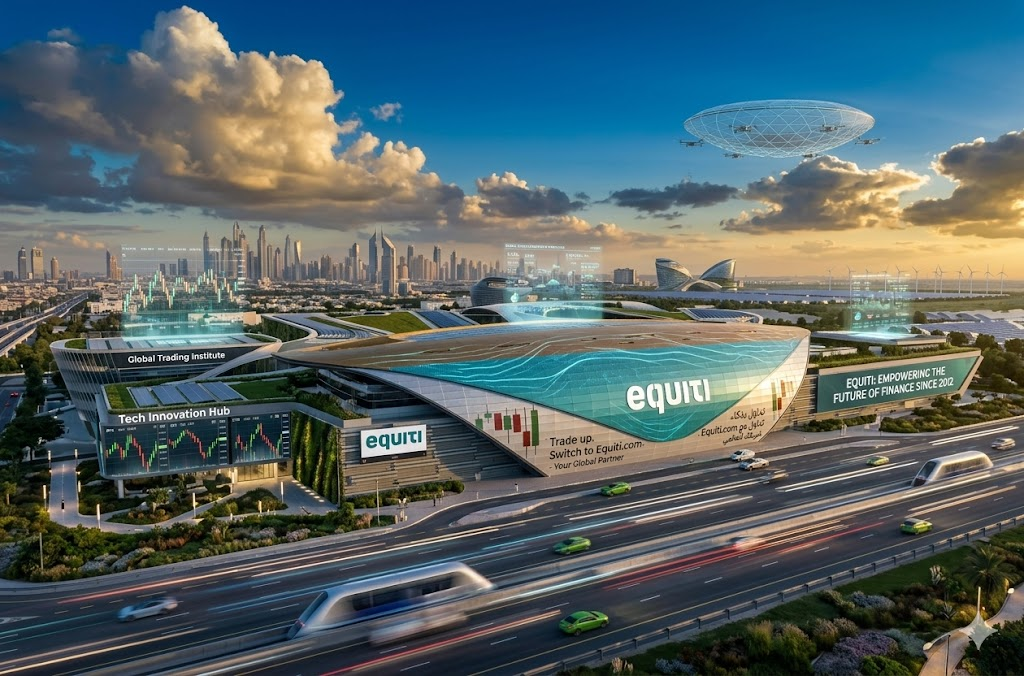
The name of the equiti metro station is inseparable from the story of the Equiti Group — the financial services company whose brand now greets hundreds of thousands of people every week from station signboards, electronic displays, and train announcements.
Iskandar Najjar, Equiti Group CEO, said: “Equiti is honoured to have been invited to be a part of the infrastructure and community of the UAE through the naming rights of one of Dubai’s most centrally located metro stations on Sheikh Zayed Road. As a global broker, we are exceptionally pleased to collaborate with the Roads and Transport Authority on our journey to becoming the most prominent multi-asset, multi-platform broker in the UAE.”
In April 2022, the RTA commenced mounting the newly named station on exterior signboards, in smart and electronic systems of the public transport system, as well as onboard voice announcements across metro trains before and upon arrival at the station, so as to familiarise passengers and station goers with the new name.
For the Equiti Group, the naming rights represent a unique form of brand visibility — daily, unavoidable, and deeply embedded in the routines of the city’s population. For the RTA, the arrangement provides revenue that can be reinvested into the network’s ongoing maintenance and expansion. And for commuters, the name is simply a landmark — a familiar waypoint in the rhythm of their daily lives.
Future Developments and Planned Improvements
Dubai’s transport infrastructure is never static. The RTA continually evaluates and upgrades its network to keep pace with the city’s growth, and the equiti metro station is no exception.
The station is set to undergo several improvements to enhance its efficiency and connectivity. These include upgrades to accommodate better integration with feeder bus routes, cycling paths, and pedestrian infrastructure.
As Dubai continues to develop the areas surrounding Al Quoz — including the expansion of Alserkal Avenue, the growth of new residential communities to the south, and the ongoing development of the Dubai Hills Estate corridor — the catchment area of the equiti metro station is likely to expand. This will drive higher passenger volumes and may prompt the RTA to review the station’s capacity and service frequency.
The broader context of Dubai’s transport planning also points toward continued investment in active mobility — walking and cycling infrastructure — which will increasingly connect the equiti metro station to a wider web of non-motorized travel options. Bicycle lanes, pedestrian bridges, and shaded walkways are among the investments that will make the equiti metro station even more accessible in the years ahead.
Additionally, as Dubai continues to host major international events and develop Expo City Dubai as a permanent destination, the Red Line’s role — and by extension the equiti metro station’s importance as a staging point on journeys toward Expo City — is set to grow significantly over the coming decade.
Comparing Equiti Metro Station to Other Red Line Hubs
The Red Line of the Dubai Metro features more than 29 stations, each with its own character and catchment. How does the equiti metro station compare?
Unlike Union Station — the central interchange between the Red and Green Lines — the equiti metro station serves a more focused geographic catchment. It is not a mega-interchange, but this relative focus is precisely what makes it efficient. Passengers are not competing with interchange crowds; they board, travel, and alight in a streamlined environment that rarely reaches the overcrowding levels seen at central stations.
Compared to the Burj Khalifa / Dubai Mall station, which draws enormous tourist volumes, the equiti metro station has a more balanced passenger profile — a mix of daily commuters, Al Quoz workers, shoppers bound for Gold and Diamond Park, and residents of the surrounding neighborhoods. This demographic diversity gives the station a lively, purposeful energy at virtually every hour of the day.
In terms of facilities, the equiti metro station is well-equipped relative to its size and passenger volume. It may not feature the elaborate architectural statements of landmark stations, but it offers everything a daily commuter needs and does so with consistent efficiency.
Frequently Asked Questions
What line is the equiti metro station on?
The equiti metro station is located on the Red Line of the Dubai Metro, the system’s primary and longest route, which runs from Rashidiya in the northeast to Expo City Dubai in the southwest.
What was the equiti metro station called before?
The station has had several names: it opened as First Gulf Bank Metro Station in 2010, was renamed First Abu Dhabi Bank Metro Station in 2018 following a banking merger, was then renamed Umm Al Sheif Metro Station in November 2020, and finally became the equiti metro station in April 2022.
What are the operating hours of the equiti metro station?
The station operates daily from 5:00 AM to midnight, with hours extended to 1:00 AM on Fridays and Saturdays.
How much does it cost to travel from the equiti metro station?
Fares typically range from AED 3 to AED 7.5, depending on the distance traveled. Children under 5 travel free, and discounts apply to students, seniors, and People of Determination.
Which feeder buses depart from the equiti metro station?
Feeder buses F25 and F26 leave from the station for various destinations in Al Quoz. Additional bus routes serve broader areas, including Al Wasl Road and Dubai Hills Estate.
Is the equiti metro station wheelchair accessible?
Yes. The station features elevators, escalators, and ramps that connect all levels from the street to the platforms, along with tactile paving for visually impaired users and wide gates for wheelchair users.
What is the nearest landmark to the equiti metro station?
Gold and Diamond Park is just 2 to 3 minutes’ walk from the station, making it the closest major attraction.
Can tourists use the equiti metro station to explore Dubai?
Absolutely. The equiti metro station provides direct access to key parts of the city, and a Nol card can be purchased on arrival at the station for straightforward cashless travel throughout the network.
Is there parking near the equiti metro station?
Nearby paid car parking is available in the Al Quoz area, alongside dedicated taxi ranks and bus bays for seamless transfers. The station itself includes bicycle racks for cycle-to-metro commuters.
What is the station code for the equiti metro station?
The station is designated as R31 within the Dubai Metro network.
Conclusion: A Station That Defines Connectivity in Modern Dubai
The equiti metro station is, in every meaningful sense, a microcosm of Dubai itself. It carries the weight of history in its multiple names, the ambition of its elevated engineering, the diversity of its daily ridership, and the forward momentum of a city that refuses to stop reimagining itself. For the tens of thousands of people who pass through it each day, it is simply where life’s next chapter begins — a place that connects home to work, work to leisure, and the familiar to the unexplored.
For newcomers to Dubai, the equiti metro station is an excellent introduction to what this city does better than almost any other urban environment on earth: build infrastructure that works, maintain it to impeccable standards, and make it accessible to everyone regardless of age, ability, or background. For long-term residents, it is a trusted companion in the routine of daily life — reliable, efficient, and quietly indispensable.
Whether you are heading to the Gold and Diamond Park, commuting to the Al Quoz industrial zone, catching a connecting bus to Al Barsha, or simply traveling onward along the Red Line to Mall of the Emirates or Expo City Dubai, the equiti metro station serves you with the quiet competence that is Dubai’s greatest civic achievement. Plan your journey, top up your Nol card, and let the city’s finest transit network take you exactly where you need to go.