F24 Bus Stop: The Complete Guide to Dubai’s Essential RTA Feeder Route (2025)
Everything you need to know about the f24 bus stop — from route details and timings to NOL card fares, real-time tracking, accessibility features, and insider commuting tips for Dubai’s most relied-upon feeder bus.
Dubai is globally celebrated for its forward-thinking infrastructure, and nowhere is this ambition more visible than in the emirate’s public transportation ecosystem. Managed by the Roads and Transport Authority (RTA), Dubai’s integrated transport network blends metro lines, feeder buses, water taxis, and tram services into one seamlessly connected system. At the heart of this ecosystem, serving as a daily lifeline for thousands of commuters, students, and workers, is a feeder route that bridges the metro network with some of the city’s most densely populated and economically active districts.
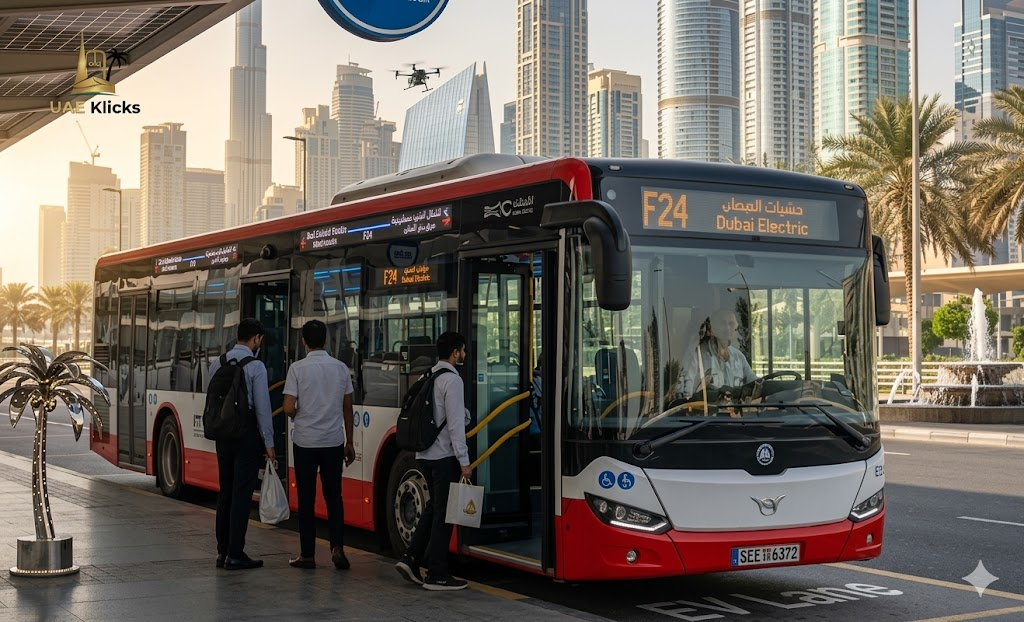
The f24 bus stop network is not simply a collection of roadside shelters. It represents a carefully designed corridor of connectivity, linking Stadium Metro Station on the Green Line with the labour-intensive streets of Qusais Industrial Area 3. Day in and day out, before the sun rises over the Dubai skyline, the first departures of this route are already in motion — carrying factory workers, healthcare staff, schoolchildren, and budget-conscious tourists across eleven kilometres of Al Nahda and Qusais neighbourhoods.
This guide is the most complete resource available for understanding this route in its entirety. Whether you are planning your first ride, relocating to the area, or simply trying to decode Dubai’s transport map, everything you need is here.
What Is the F24 Bus and Why Does It Matter?
The F24 is classified as a feeder bus service under the RTA’s public transport framework. Feeder buses in Dubai serve a specific and critical function: they extend the reach of the metro beyond the fixed rail network, collecting passengers from residential pockets and industrial zones that the metro does not directly serve and funnelling them efficiently toward metro interchange stations.
The “F” prefix in the route name stands for “Feeder,” distinguishing this bus from express services (X), night services (N), intercity coaches (E), and urban circular routes (C). Understanding this classification helps riders anticipate what kind of service to expect — frequent, affordable, neighbourhood-level transit that prioritises accessibility over speed.
The significance of this particular feeder route extends far beyond simple transport logistics. Al Nahda and Al Qusais represent two of Dubai’s most multicultural and populous districts. Home to a large expatriate workforce from South Asia, Southeast Asia, and the Arab world, these neighbourhoods contain dense residential towers, private schools, shopping malls, DEWA substations, hospitals, and a sprawling industrial zone that houses hundreds of small and medium manufacturing businesses. Without a reliable feeder connecting these areas to the metro, daily life for tens of thousands of residents would become significantly more expensive and logistically complicated. The f24 bus stop system solves that problem with elegance and reliability.
F24 Bus Route Overview: The Full Picture
Understanding the geographic scope of this route is essential before planning any journey on it.
Starting Point: Stadium Metro Bus Stop (Green Line, Al Qusais) Ending Point: Qusais Industrial Area 3, Terminus Approximate Distance: 11 kilometres Average Journey Duration: 25 to 45 minutes (highly traffic-dependent) Service Type: Feeder Bus (RTA Dubai) Route Classification: Daily, seven days a week
The route essentially traces a southeasterly arc from Stadium Metro Station, cutting through the residential fabric of Al Nahda, crossing commercial landmarks like Sahara Centre, passing educational institutions such as Al Maaref Private School and Dubai Carmel School, providing healthcare access at NMC Hospital, and finally penetrating deep into the industrial streets of Qusais Industrial Areas 1, 2, and 3 before terminating at the main depot terminus.
This geographical diversity makes the f24 bus stop infrastructure remarkably versatile. A student boards at one stop, a factory worker at another, a shopper at a third — all sharing the same clean, air-conditioned vehicle, all paying a fare that makes daily travel financially sustainable.
Complete List of F24 Bus Stops with Landmarks
One of the most searched aspects of this route is the complete stop-by-stop breakdown. The following table presents every major stop on the route in the direction from Stadium Metro Station toward Qusais Industrial Area 3 Terminus, along with the key landmarks and the demographic groups each stop primarily serves.
| Stop No. | Location Name | Key Nearby Landmark | Primary User Group |
|---|---|---|---|
| 1 | Stadium Metro Bus Stop | Green Line Metro, Al Qusais Community | Metro transferees, all commuters |
| 2 | Al Nahda 1, DEWA | DEWA Substation, residential towers | Residents of Al Nahda 1 |
| 3 | Al Maaref Private School | Al Maaref Private School | Students, teachers, parents |
| 4 | NMC Hospital | NMC Specialty Hospital Al Nahda | Patients, medical staff, visitors |
| 5 | Sahara Centre | Sahara Centre Shopping Mall | Shoppers, retail workers |
| 6 | Dubai Carmel School | Dubai Carmel School | Students and school staff |
| 7 | Qusais, Public Transport Depot | RTA Bus Depot, Qusais | Depot staff, transit operators |
| 8 | Qusais Industrial Area 3, Masjid Mustaqeem | Mustaqeem Mosque | Workers, area residents |
| 9 | Qusais Depot Entrance | Industrial Zone Entrance | Factory and warehouse workers |
| 10 | Qusais Industrial Area 3, Atiq Abdullah Flour Mill | Abdullah Flour Mill | Industrial workers |
| 11 | Qusais Industrial Area 3, Terminus | End of route, main terminus | Final alighters, return-trip boarding |
Each stop along this corridor has been selected by RTA planners based on population density, proximity to key services, and the volume of daily passenger flow. What looks like a simple list of names on a timetable board is, in reality, a thoughtfully engineered network of access points designed to serve the maximum number of people with the minimum number of transfers.
The f24 bus stop at Stadium Metro Station (Stop 1) deserves particular attention. This is not merely where the route begins — it is the vital interchange point where the Green Line metro system and the surface bus network meet. Passengers arriving by metro from areas like Al Ghubaiba, Union, BurJuman, and Creek can exit the metro and seamlessly board the bus without navigating long distances or confusing signage. The integration is by design.
F24 Bus Timings: Weekday and Weekend Schedules
Knowing the schedule is the foundation of any successful commute. The following timing information reflects the current operational schedule as confirmed by RTA sources and commuter data from 2025.
Weekday Timings (Monday to Friday)
On weekdays, the F24 operates with a high frequency that caters to both early-morning shift workers and late-night returnees.
- First Departure: 5:30 AM from Stadium Metro Station
- Last Departure: 11:00 PM
- Peak Hour Frequency: Every 15 to 20 minutes (approximately 7:00 AM to 9:00 AM and 5:00 PM to 8:00 PM)
- Off-Peak Frequency: Every 20 to 30 minutes
The early 5:30 AM departure is particularly significant. It ensures that shift workers in the industrial zones of Qusais can reach their workplaces before the standard 6:00 AM start time, aligning the bus schedule with the rhythms of Dubai’s working-class economy.
Weekend Timings (Saturday and Sunday)
On weekends, frequency is slightly reduced to reflect lower demand, though the route remains fully operational.
- First Departure: 6:00 AM
- Last Departure: 10:30 PM
- Frequency: Every 20 to 30 minutes throughout the day
Friday Schedule
Fridays represent a special case in Dubai’s transport calendar. As the Islamic holy day, Friday mornings see reduced ridership followed by a surge in afternoon and evening activity as prayers conclude and families head out for leisure and shopping. The F24 adjusts accordingly, with reduced early-morning frequency and higher frequency from early afternoon onward. salary checking
Public Holidays and Special Events
During major public holidays — UAE National Day, Eid al-Fitr, Eid al-Adha, and Islamic New Year — and during the month of Ramadan, bus timings are subject to adjustment. Ramadan schedules, in particular, typically shift departure times to accommodate suhoor and iftar patterns. Always verify current timings through the official RTA S’hail App before planning a journey during these periods.
F24 Bus Fare: Understanding the NOL Card System
Dubai’s bus fare system operates entirely through the NOL Card, a contactless smart card that functions as a unified payment method across all RTA-operated transport modes, including buses, metro, tram, and marine transit. Cash is not accepted on board.
The standard fare for a feeder bus journey like the one covered by this route is AED 3.00 for Silver and Blue NOL Card holders travelling within a single zone, making it one of the most affordable transport options in a city renowned for its high cost of living.
NOL Card Types and Fare Structure
| Card Type | Description | Within 1 Zone | 2 Zones | More Than 2 Zones |
|---|---|---|---|---|
| Silver Card | Standard rechargeable card for general public | AED 3.00 | AED 5.00 | AED 7.50 |
| Gold Card | Premium card with access to Gold Class seating | AED 6.00 | AED 10.00 | AED 15.00 |
| Blue Card | Discounted card for students, seniors, and People of Determination | AED 3.00 | AED 5.00 | AED 7.50 |
| Red Ticket | Single-trip paper ticket for visitors and infrequent users | AED 4.00 | AED 6.00 | AED 8.50 |
For most daily commuters using the f24 bus stop system, the Silver Card is the recommended choice. It can be topped up at metro stations, at ticket vending machines, at authorised retailers, and through the RTA website or app. The card also benefits from a daily cap system — meaning that once you have paid a set maximum amount in a single day, all subsequent journeys within that day are free.
The Blue Card is especially relevant for the many students who use the F24 to access Al Maaref Private School and Dubai Carmel School, as well as for elderly residents and passengers with disabilities. The discounted fare structure makes daily bus travel genuinely accessible for those on limited incomes.
For tourists and occasional visitors, the Red Ticket offers a convenient entry point, though frequent visitors will quickly find that purchasing a Silver Card pays for itself within a few journeys.
Important NOL Card Usage Note
All NOL Card holders must tap in when boarding and tap out when exiting. Failure to tap out results in the system charging the maximum possible fare for the journey zone. This two-tap requirement applies regardless of the stop at which you exit, so making tapping out a habit from your very first ride will save you from unexpected charges.
How to Get to the Stadium Metro Bus Stop (Starting Point)
For passengers arriving from other parts of Dubai and connecting to the F24, the journey begins at Stadium Metro Station on the Green Line. Here is a step-by-step boarding guide:
- Take the Dubai Metro Green Line toward Union or Creek Station and alight at Stadium Metro Station.
- Follow the exit signs toward the RTA Bus Terminal, which is integrated within the station complex.
- Look for the designated feeder bus bays — the F24 departs from a clearly marked bay at the bus interchange.
- Tap your NOL Card on the reader at the bus door when boarding.
- Take a seat, enjoy the air conditioning, and tap out when you reach your intended f24 bus stop.
The integration between the metro exit and the bus bays at Stadium Station is excellent by regional standards. Covered walkways protect passengers from the intense Dubai sun during summer months, and clear signage in both Arabic and English directs passengers to the correct platform.
For passengers travelling in the reverse direction — from Qusais Industrial Area 3 toward Stadium Metro Station — the bus operates the same stops in reverse order, with the first stop at the Qusais Industrial Area 3 Terminus.
Real-Time Tracking: Never Miss Your Bus Again
One of the most practical upgrades to Dubai’s public transport system in recent years has been the introduction of real-time GPS tracking for all RTA buses. The days of standing uncertainly at a roadside shelter wondering whether the bus has already passed are effectively over for tech-savvy commuters.
RTA S’hail App
The RTA S’hail App is the primary tool for real-time bus tracking in Dubai. Available for both iOS and Android, the app provides live arrival predictions, displays the current location of buses on a map, sends service alerts about delays or route changes, and allows passengers to plan multi-modal journeys that combine metro, bus, and marine transit into a single itinerary.
To find real-time updates for any specific f24 bus stop location, simply open the app, enter your stop name or tap your location, and the app will display the next scheduled arrival and the live position of the approaching bus.
RTA Wojhati App
Wojhati is RTA’s journey planning platform, designed for users who need to plan complex itineraries involving multiple transport modes. If you are travelling from, say, Dubai Marina to a workshop in Qusais Industrial Area 3, Wojhati will calculate the optimal route, including which metro line to take, where to board the F24, and the total expected travel time.
Google Maps and Third-Party Apps
Google Maps, Moovit, and Transit App all carry real-time data for Dubai’s bus network through RTA data feeds. These platforms are particularly useful for tourists already familiar with these apps from their home countries.
Onboard Experience: Comfort, Accessibility, and Sustainability
The quality of the ride itself is an important consideration, especially for daily commuters who may spend 30 to 45 minutes on the bus each way. Dubai’s RTA has invested significantly in upgrading its fleet in recent years, and the buses serving the F24 reflect those improvements.
Air Conditioning
This is non-negotiable in Dubai, where summer temperatures regularly exceed 40 degrees Celsius. All RTA feeder buses operate fully air-conditioned cabins, maintained to a standard that makes the journey genuinely comfortable even during the most intense summer months.
Accessibility for People of Determination
Each bus is equipped with a low-floor ramp system at the front door, allowing wheelchair users and passengers with mobility challenges to board without requiring assistance lifting them up steps. Priority seating is reserved near the front of the vehicle, clearly marked and respected by most passengers. Audio announcements and visual displays indicate upcoming stops, benefiting visually and hearing-impaired passengers.
CCTV and Safety Systems
All buses on the F24 route are equipped with CCTV cameras for passenger security. Emergency call buttons are accessible from designated seats. The combination of these features means that solo travellers, women travelling alone, and elderly passengers can feel secure throughout their journey.
Environmental Commitments
RTA has been progressively transitioning its bus fleet toward cleaner fuel technologies, including compressed natural gas (CNG) and hybrid-electric vehicles. While not all F24 departures run on alternative fuels yet, the transition is ongoing, and passengers travelling on the route today are already benefiting from reduced emissions compared to older diesel-only fleets.
Hygiene Standards
Post-pandemic, RTA maintained elevated hygiene protocols across its bus network, with daily cleaning and sanitisation routines that continue to the present day. Hand sanitiser dispensers are available at key interchange points.
Neighbourhoods Served: What You Will Find Along the Route
Understanding the character of the areas served by this corridor enriches the travel experience and is particularly helpful for newcomers to Dubai.
Al Nahda: A Vibrant Multicultural Hub
Al Nahda is one of Dubai’s most densely populated residential districts, straddling the border between Dubai and Sharjah. The neighbourhood is home to a large South Asian expatriate community, with an impressive concentration of Indian and Pakistani restaurants, grocery stores, electronics shops, and community spaces. Property in Al Nahda offers some of the more affordable rental rates in Dubai, making it a popular base for working professionals.
The f24 bus stop serving the Al Nahda 1 DEWA area is one of the busiest on the route during morning rush hours, as workers and students fan out from residential towers toward metro connections and workplaces across the city.
Sahara Centre: Shopping and Retail Access
The stop near Sahara Centre, one of Sharjah’s best-known shopping malls situated close to the Dubai–Sharjah border, makes this route relevant for cross-border retail and leisure travel. While technically in Sharjah, Sahara Centre draws enormous foot traffic from Dubai residents, and its proximity to the route makes F24 a practical choice for shoppers who prefer not to drive.
NMC Hospital: Healthcare Connectivity
Healthcare access is a key function of any urban transit route, and the F24 delivers on this front by serving NMC Specialty Hospital in Al Nahda — one of the major multispecialty hospitals in the eastern corridor of Dubai. Patients attending appointments, staff beginning and ending shifts, and visitors can all use the f24 bus stop outside NMC to access the facility at a fraction of the cost of a taxi.
Qusais Industrial Area: The Economic Engine
The Qusais Industrial Area is a vast zone of warehouses, manufacturing units, logistics firms, and small workshops that employs tens of thousands of workers. Many of these workers live in shared accommodation in Al Nahda and rely entirely on public transport to reach their workplaces. Without the F24 feeder, the last kilometre from the nearest metro to the industrial zone would require either a significant walk in harsh heat or an expensive taxi fare. The feeder route solves this problem directly and economically.
Comparing F24 with Alternative Routes
For passengers with flexibility in their origin or destination, understanding how the F24 compares to neighbouring feeder routes can help optimise the journey.
F22 Bus Route
The F22 operates from Stadium Metro Station and covers parts of Al Qusais and surrounding areas. Passengers heading specifically to Al Qusais residential areas rather than the industrial zone may find the F22 more direct, while those heading to the industrial terminus are better served by the F24.
F61 Bus Route
The F61 serves a different corridor, connecting Abu Hail Metro Station to Al Qusais Industrial Area through a different alignment. Passengers in the Abu Hail area may prefer the F61 as a more direct option.
C10 Circular Route
For passengers who need to travel within the Al Nahda and Al Qusais districts without going all the way to the industrial terminus, the C10 circular route may offer useful connectivity without requiring a metro trip.
Taxi and Ride-Hailing
For comparison, a taxi from Stadium Metro Station to Qusais Industrial Area 3 typically costs between AED 20 and AED 35 depending on traffic and time of day. The F24 feeder accomplishes the same journey for AED 3.00, representing a saving of approximately AED 15 to AED 30 per trip, or AED 30 to AED 60 per day for a round trip. Over a working month, this difference compounds into hundreds of dirhams — a significant consideration for workers on modest incomes.
Tips for a Smooth Commute on This Route
Commuting confidently on any bus route in a new city requires more than just knowing the schedule. Here are the most useful practical tips drawn from the experiences of regular F24 riders.
Top up your NOL Card before you need to. Running out of credit at the boarding point is a frustrating experience that can make you miss your departure. Most metro stations have ticket vending machines that accept cash, debit cards, and credit cards for NOL top-ups.
Use the S’hail App the first few times. Even experienced Dubai commuters occasionally check the app to confirm live arrival times, especially during peak hours when buses can run a few minutes behind schedule.
Board from the right door. On most RTA buses, passengers board from the front door and alight from the rear door. The NOL reader is located at the front of the bus.
Check timings on public holidays. Schedules during Eid, National Day, and Ramadan can differ significantly from standard weekday or weekend timetables. A quick check on the app or website before leaving home avoids wasted trips.
Arrive a few minutes early during peak hours. Buses can fill quickly at the Stadium Metro Bus Stop during the morning rush (7:30 AM to 9:00 AM), and while standing is permitted, a seat makes the journey more comfortable, especially for the full eleven-kilometre trip.
Respect the quiet zones. While Dubai buses are not as formally regimented as some Asian transit systems, general etiquette favours quiet conversation, no eating or drinking, and giving up priority seats to elderly passengers, pregnant women, and people with disabilities.
Keep a charged phone with the S’hail app installed. Digital NOL card functionality is also available through the RTA app, and having your transport tools ready digitally adds resilience to your commute.
The F24 in the Context of Dubai’s Broader Smart Mobility Vision
Dubai’s leadership has consistently articulated a vision of a city where 25% of all journeys are made on autonomous or smart transport by 2030. Public bus networks like the F24 play a foundational role in achieving this target — not by being glamorous or headline-grabbing, but by being reliable, affordable, and deeply embedded in the daily routines of hundreds of thousands of residents.
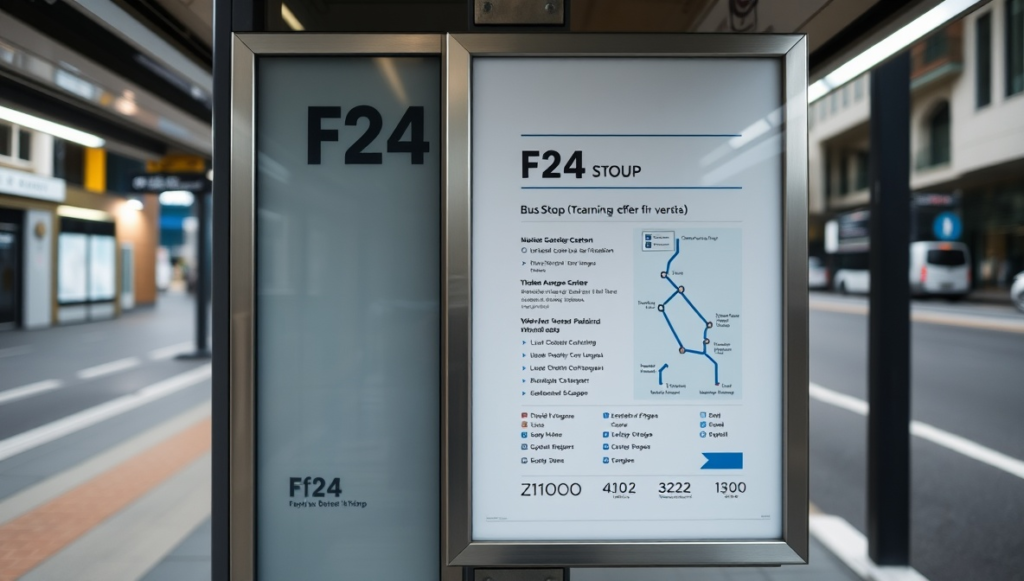
The investment in bus shelters with digital arrival screens, real-time GPS tracking, accessible boarding systems, and smart payment infrastructure demonstrates that the RTA is treating its bus network as a serious long-term asset rather than a temporary solution pending the expansion of the rail network. Every upgrade to the f24 bus stop experience — whether a new air-conditioned shelter, a clearer route map on the boarding platform, or improved integration with the metro ticketing system — moves the needle toward that 2030 goal.
The route also plays a quiet but important social role. For the thousands of low-income workers who depend on it, the F24 is not simply transport — it is economic participation. It is the mechanism by which a factory worker in Qusais Industrial Area 3 can live in the more affordable residential streets of Al Nahda without spending a disproportionate share of their wage on getting to work. Affordable, reliable public transport is a form of social infrastructure, and the F24 quietly delivers that function every single day.
Frequently Asked Questions (FAQs)
What is the first and last bus time on the F24 route?
On weekdays, the first departure from Stadium Metro Station is at 5:30 AM, with the last bus running at 11:00 PM. On weekends, services begin at 6:00 AM and conclude at 10:30 PM. These timings may vary on public holidays and during Ramadan, so confirming through the RTA S’hail App before travel is always advisable.
How many stops does the F24 have?
Depending on the direction of travel and the specific service, the route covers between 11 and 14 stops. In the direction from Stadium Metro Station to Qusais Industrial Area 3 Terminus, the main stops total 11. The return direction may include additional stop variations.
Can I use cash on the F24 bus?
No. All RTA buses in Dubai are cashless. Payment must be made using a NOL Card, which can be purchased and topped up at metro stations, ticket vending machines, and RTA-authorised retailers.
How long does the full F24 journey take?
The full journey from Stadium Metro Station to Qusais Industrial Area 3 Terminus takes approximately 25 to 45 minutes, depending on traffic conditions. During off-peak hours, the journey typically completes closer to the 25-minute mark. During the morning rush hour, travel time can extend to 40 minutes or more.
Does the F24 run on Fridays and public holidays?
Yes. The F24 operates every day of the week, including Fridays and public holidays. On Fridays, frequency may be reduced during early morning hours but increases through the afternoon and evening. On public holidays, schedule adjustments are published through RTA’s official channels.
How much does it cost to ride the F24 with a NOL Card?
For Silver and Blue Card holders travelling within a single fare zone, the standard fare is AED 3.00. Red Ticket users pay AED 4.00. For journeys spanning two zones, Silver and Blue Card fares rise to AED 5.00. The full journey from Stadium Metro to Qusais Industrial Area 3 typically falls within one or two zones depending on the specific origin and destination stops.
Is the F24 bus accessible for wheelchair users?
Yes. All buses on this route are equipped with low-floor ramp access at the front door and priority seating for passengers with mobility challenges. Wheelchair users can board and alight independently at any f24 bus stop along the route.
How can I track the F24 bus in real time?
Real-time tracking is available through the RTA S’hail App, the RTA Wojhati App, Google Maps, and third-party apps like Moovit and Transit App. All of these platforms draw on real-time GPS data from RTA, providing accurate live arrival predictions.
Are there seats reserved for women and children on the F24?
Yes. Like all RTA buses in Dubai, designated seating sections are reserved for women and children at the front of the bus. These sections are separated from the general seating area and must be respected by all passengers.
What happens if I forget to tap out with my NOL Card?
If you board using a NOL Card but fail to tap out at your destination, the system will automatically charge the maximum fare for the journey zone. This charge is calculated conservatively and typically exceeds what a properly tapped journey would cost. Always tap out when exiting at your intended f24 bus stop to ensure the correct fare is applied.
Can I transfer to other bus routes from the F24 terminus?
Yes. The Qusais Public Transport Depot, which the route passes through at Stop 7, is a major bus interchange where passengers can transfer to other feeder and urban bus routes serving the broader Al Qusais and Deira areas. The Stadium Metro Bus Stop at the other end of the route connects to the full Dubai Metro Green Line network.
Is the F24 route covered in the RTA’s official journey planner?
Yes. The RTA Wojhati journey planner includes the F24 in its database, allowing passengers to plan end-to-end journeys that incorporate this feeder route as part of a multi-modal trip across Dubai.
Conclusion: Why the F24 Is More Than Just a Bus Route
At first glance, a feeder bus route covering eleven kilometres through eastern Dubai might seem unremarkable in a city of gleaming skyscrapers and driverless metro trains. But the F24’s importance is measured not in architectural spectacle but in daily human impact.
Each morning, the f24 bus stop at Stadium Metro Station fills with people whose livelihoods, educations, and healthcare access depend on this route running on time. Each evening, the same stops fill again as workers, students, and shoppers make their way home. The reliability of this service is not a luxury — it is a necessity for tens of thousands of people navigating the economic realities of life in one of the world’s most dynamic cities.
For first-time riders, the route offers a gentle, affordable introduction to Dubai’s public transport system. For seasoned commuters, it is a trusted daily companion. For urban planners and transport observers, it represents a model of how feeder bus networks can extend metro connectivity in a cost-effective, equitable, and operationally efficient way.
Understanding the timings, stops, fare structure, and practical nuances of any single f24 bus stop location puts commuters in control of their journey. And in a city that never stops moving, that kind of control is invaluable.
Whether you are boarding for the first time at Stadium Metro or alighting for the hundredth time at the Qusais Industrial Area 3 Terminus, the F24 is always there — dependable, air-conditioned, and ready to move you forward.